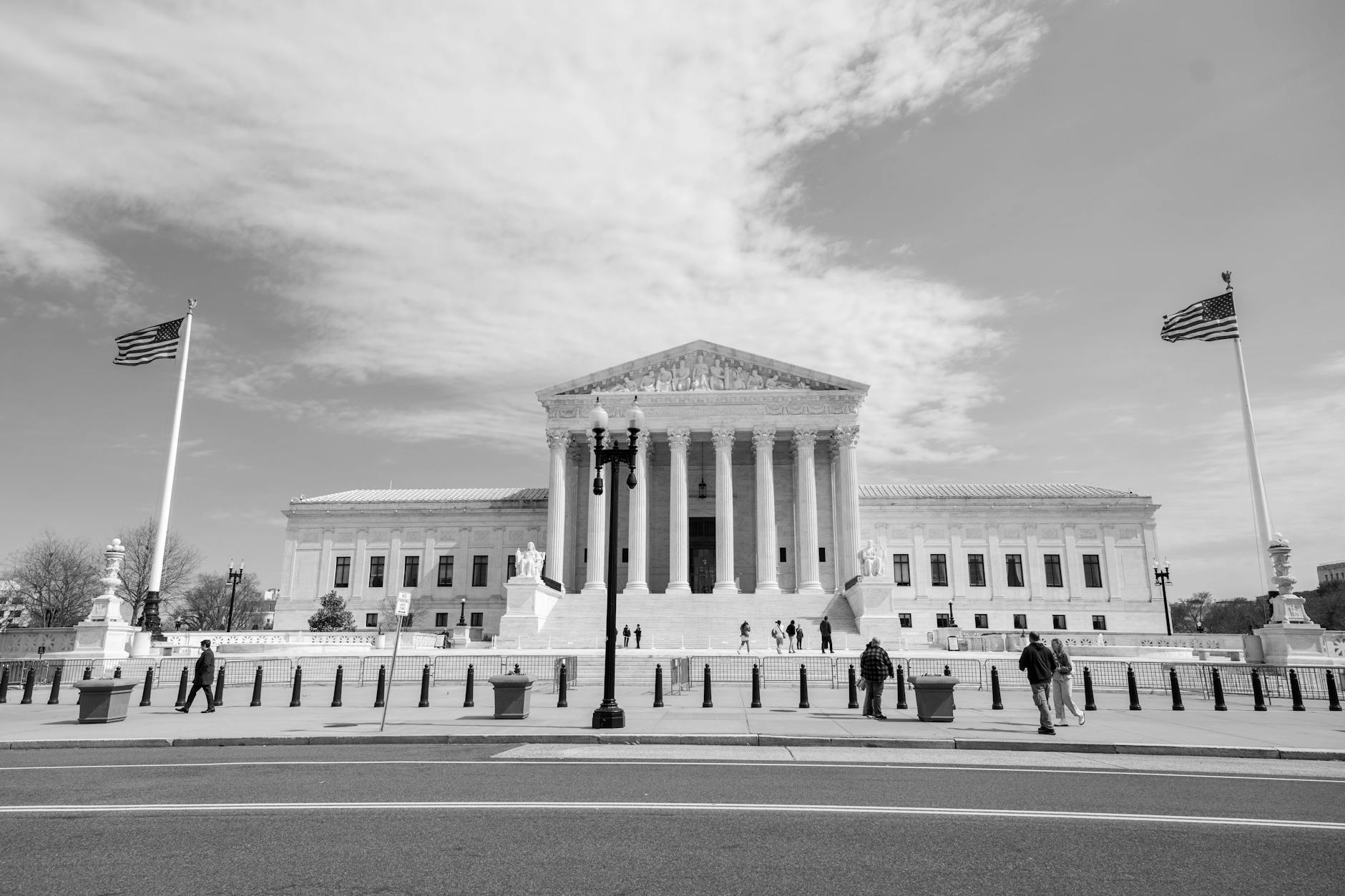

The US supreme court has handed Donald Trump a significant expansion of presidential authority over federal agencies, while ruling against him in a separate dispute involving mail, according to aligned accounts in multiple news reports.
Coverage from the Guardian and other outlets describes a decision that overturns decades of precedent limiting a president’s ability to remove the heads of federal agencies. At the same time, the court rejected a Trump-backed position related to mail, marking a split outcome with immediate implications for how the executive branch operates.
What the court decided
Reports from the Guardian characterize the ruling as giving Trump the power to fire agency chiefs more freely than before. For years, supreme court precedent had constrained presidents from removing certain agency leaders without specific cause. The new decision, as described in that reporting, dismantles key parts of that framework.
The judgment is framed in coverage as a reversal of long-standing limits on executive control over independent agencies. Those agencies, which include a range of federal regulators and commissions, have traditionally had some insulation from direct presidential removal power.
In the same set of decisions, the court ruled against Trump on a mail-related issue. While the reports do not spell out all the technical details of that mail dispute, they consistently describe it as a separate matter in which Trump did not prevail.
A break with past precedent
According to the Guardian’s account, the court’s move on agency chiefs overturns “decades of precedent” that had curbed executive power. Those earlier decisions had been interpreted as protecting certain agency heads from at-will dismissal by the president, in order to preserve a degree of independence in regulatory and enforcement work.
By setting those limits aside, the court has effectively shifted the balance of power toward the White House, as described in the coverage. The reports do not provide the full text of the opinion or identify every precedent affected, but they consistently present the ruling as a major departure from the court’s own prior approach to the structure of the administrative state.
Why this matters for government operations
News accounts note that the decision could affect policy decisions and day-to-day government operations. If presidents can remove agency chiefs more easily, they may be able to steer agencies more quickly toward their preferred priorities, or replace leaders who resist those priorities.
The Guardian’s reporting links the ruling directly to Trump’s authority, indicating that the current or future Trump administration would gain broader discretion over who runs key federal agencies. That, in turn, could influence how regulations are written, enforced, or rolled back, depending on the administration’s agenda.
The separate ruling against Trump on mail limits his position in that narrower dispute. While details in the available coverage are sparse, the consistent framing is that Trump did not succeed on that point, even as he gained ground on the broader question of control over agency leadership.
Who is involved and what is at stake
The central institutional players are the supreme court, the presidency, and the federal agencies whose leaders are now more directly exposed to presidential removal, based on the Guardian’s description. Trump is the named political figure in the coverage, with the decision explicitly framed as handing him new power over agency chiefs.
Mynorthwest.com’s reporting, while focused on a separate supreme court matter involving Trump and birthright citizenship, reinforces that the court is actively reshaping the legal boundaries around presidential authority. Taken together, these stories depict a court that is revisiting long-standing rules governing the relationship between the White House and the broader federal bureaucracy.
The Guardian has also previously reported on Trump administration clashes with specific state and local bodies, such as a California coastal agency, underscoring how control over regulatory institutions has been a recurring point of conflict. The new supreme court decision, as described in current coverage, adds a powerful legal tool to the president’s side of that equation.
Limited details and open questions
Public reporting so far offers a clear outline of the court’s direction but not a full technical map of the ruling. The available accounts:
- Agree that the court has expanded Trump’s power to fire agency chiefs.
- Agree that this reverses or cuts against decades of precedent limiting such power.
- Agree that Trump lost in a separate mail-related ruling.
They do not, however, provide detailed quotations from the majority or dissenting opinions, list all affected agencies, or specify the exact legal tests the court adopted in place of the old framework. Those details are likely contained in the court’s written opinions, which have not been fully summarized in the current set of reports.
Given those limits, it is clear that the decision marks a significant shift toward greater presidential control over agency leadership, but the precise reach of that shift across the federal government remains to be fully mapped out by legal analysts and practitioners.
What to watch next
In the coming days and weeks, attention is likely to focus on how the White House and federal agencies respond to the new legal landscape. Observers will be watching for any moves by Trump or his team to replace existing agency chiefs, testing the boundaries of the court’s ruling in practice.
Legal and policy analysts are also expected to examine the opinion closely to determine which agencies are most affected and how far the new removal power extends. Congressional responses, if any, will be another key indicator, as lawmakers consider whether to adjust agency statutes in light of the court’s decision.
On the mail issue, further filings or guidance from the relevant agencies and lower courts may clarify how the supreme court’s rejection of Trump’s position will operate on the ground. Together, these follow-on steps will show how a pair of decisions—one expanding presidential power over agencies, the other limiting Trump in a specific mail dispute—translate from legal doctrine into concrete changes in how the federal government works.