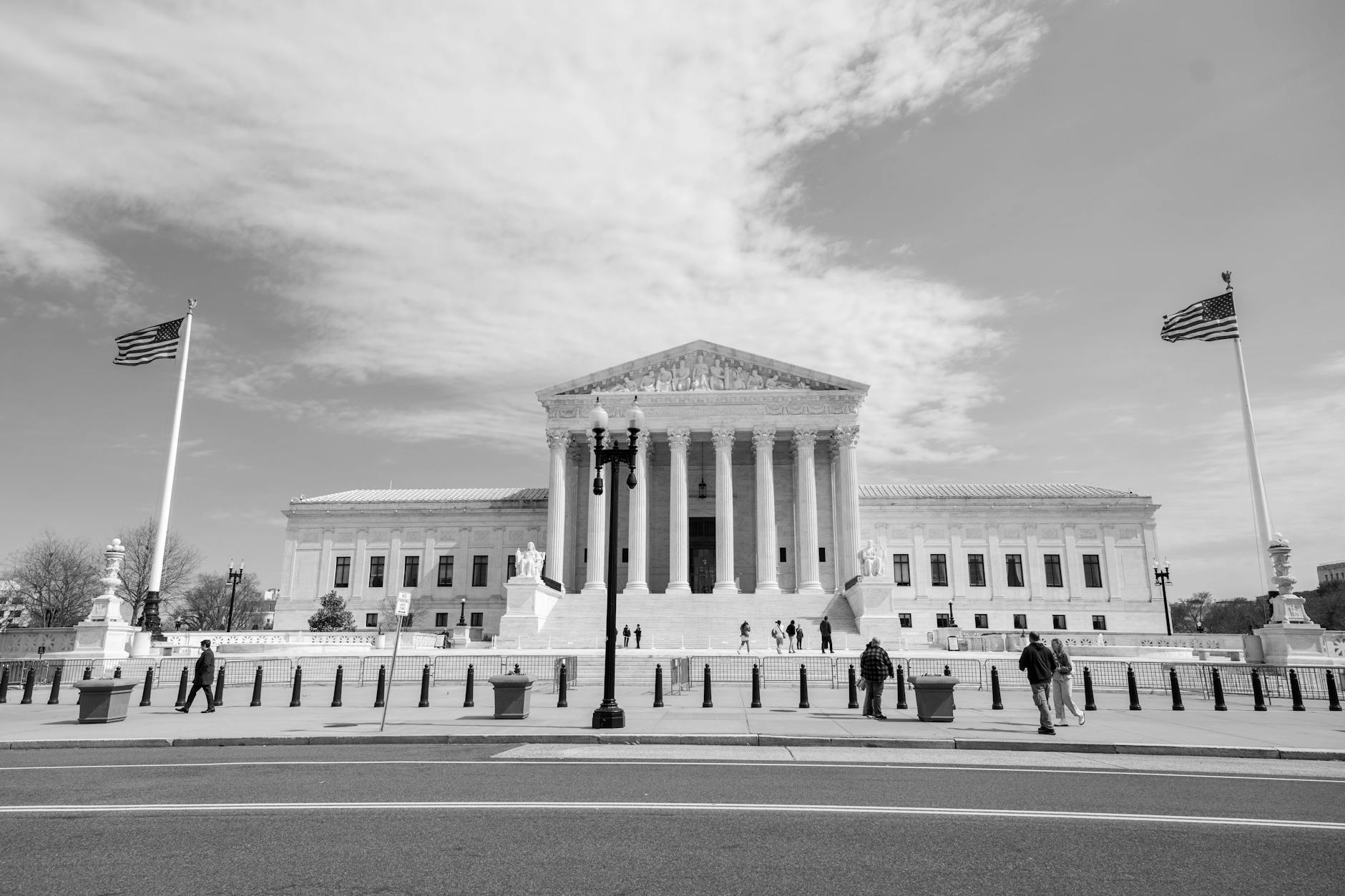
The U.S. Supreme Court has turned away a bid by Virginia Democrats to put a new, voter-approved congressional map into effect, leaving existing district lines in place for now. The decision, reported Friday by CBS News, halts—at least temporarily—an effort to implement boundaries that were drawn to favor Democrats in the upcoming midterm elections.
While the Court did not issue a detailed opinion, its refusal to revive the map is a concrete procedural step with immediate consequences for how Virginians will be represented in Congress in the near term.
What the Supreme Court Actually Did
According to CBS News, Virginia Democrats asked the Supreme Court to revive a congressional map that had been approved by voters and designed to advantage their party in the next election cycle. The justices declined that request.
In practical terms, the Court’s move does two things:
- Keeps the status quo: The existing congressional map—rather than the new, voter-approved one—remains the operative set of district lines.
- Blocks a partisan advantage: The rejected map, as described by CBS News, was drawn to benefit Democrats. By refusing to revive it, the Court prevents that shift in partisan balance, at least for the coming elections.
The Court’s action came on an emergency request, a mechanism often used to resolve time-sensitive disputes over election rules and maps. The justices’ refusal does not necessarily settle every legal question about Virginia’s redistricting, but it does resolve which lines will govern the next vote unless another court order intervenes.
Why This Matters for Virginia Voters
The immediate stakes are straightforward: which communities are grouped together to choose a member of Congress.
Because the new map was designed to favor Democrats, its revival could have reshaped which party is more likely to win specific districts. With the Supreme Court keeping that map on hold, voters will cast ballots under an older configuration that, by definition, reflects earlier political and demographic compromises.
CBS News notes that the blocked map was both voter-approved and partisan in effect, highlighting a tension that often arises in redistricting fights: voters may endorse a process or outcome that still carries clear partisan consequences. The Court’s decision effectively prioritizes legal and procedural concerns over the immediate implementation of that voter-backed change.
For individual Virginians, this means:
- Communities that expected to be shifted into new districts under the updated map will, for now, remain where they are.
- Candidates and campaigns that had begun planning around the new lines must recalibrate to the existing map.
- Groups that invested in promoting the voter-approved changes see their efforts delayed, if not derailed.
The Legal and Political Stakes
Because CBS News is the primary source for this development, only limited detail is available about the underlying legal arguments. Still, the basic stakes are clear from the outlet’s description:
- For Virginia Democrats: The new map represented an opportunity to lock in more favorable districts ahead of the midterms. Losing that advantage changes the battlefield they face.
- For Republicans: Maintaining the current lines avoids a shift that was explicitly drawn to benefit their opponents.
- For election administrators: The Supreme Court’s refusal provides short-term clarity. Officials can continue preparations using the existing map without having to reconfigure precincts and ballots around new boundaries.
CBS News frames the map as both “voter-approved” and “drawn to advantage” Democrats, underscoring that the dispute is not only about partisan gain but also about how far courts should go in either honoring or restraining changes that emerge from state-level processes.
How Firm Is This Decision?
The reader question—how likely this move is to be formally confirmed in the next week—touches on what the Supreme Court’s refusal actually signals.
Based on CBS News’ account, the Court has already taken a formal step: it has rejected the bid to revive the map. That is itself a completed action, not a tentative one awaiting further internal confirmation.
Because independent corroboration is currently limited, as noted in the available evidence, there are two key points to keep in mind:
- The core event is documented: A major national outlet, CBS News, has reported the Court’s refusal. That is a concrete, on-the-record development.
- Broader confirmation may follow: Additional outlets and official court documentation typically trail early reporting by hours or days. However, the underlying Court action—denying the request—is already a formal judicial act, not a proposal.
In that sense, the question is less whether the move will be “confirmed” and more how widely it will be corroborated and contextualized by other reporting and official records in the coming days.
Who Gains and Who Loses Right Now
With the evidence currently available, the most immediate winners and losers can be described in general terms.
Likely Beneficiaries
- Incumbents and parties advantaged by the current map: Because the blocked map was drawn to benefit Democrats, maintaining the existing lines likely preserves advantages for Republicans or for incumbents who were better positioned under the old configuration. CBS News’ description implies that Democrats were seeking a net gain, so blocking that change protects the status quo.
- Election officials: Avoiding a late-stage map change reduces administrative risk and confusion. Sticking with the known map simplifies voter outreach, ballot design, and logistics.
Those at a Disadvantage
- Virginia Democrats: They lose the strategic edge the new map was designed to provide. Their candidates must compete under lines that, by CBS News’ account, were less favorable to them than the voter-approved alternative.
- Voters who backed the new map: For Virginians who supported the updated boundaries, the Court’s decision represents a delay or denial of what they saw as an improvement—whether for fairness, competitiveness, or partisan alignment.
What to Watch Next
With only one primary source and limited corroboration so far, several developments will be important to track:
- Official court documentation: The text of the Supreme Court’s order—typically a brief entry—will clarify exactly what was denied and on what procedural basis. CBS News’ reporting indicates the outcome; the order will show the precise legal posture.
- Further media confirmation: Additional reporting from other outlets can provide independent verification and more detail on the map’s design and the arguments each side presented.
- State-level responses: How Virginia officials and party leaders respond—whether by exploring new legal avenues or accepting the current lines for the coming election—will shape what this decision means beyond the immediate cycle.
For now, what is clear from CBS News’ account is that the Supreme Court has chosen not to intervene in a way that would immediately reshape Virginia’s congressional landscape. The existing map remains in force, and the partisan balance that Democrats hoped to alter will, for the next election at least, be decided under familiar lines rather than the voter-approved plan they sought to revive.