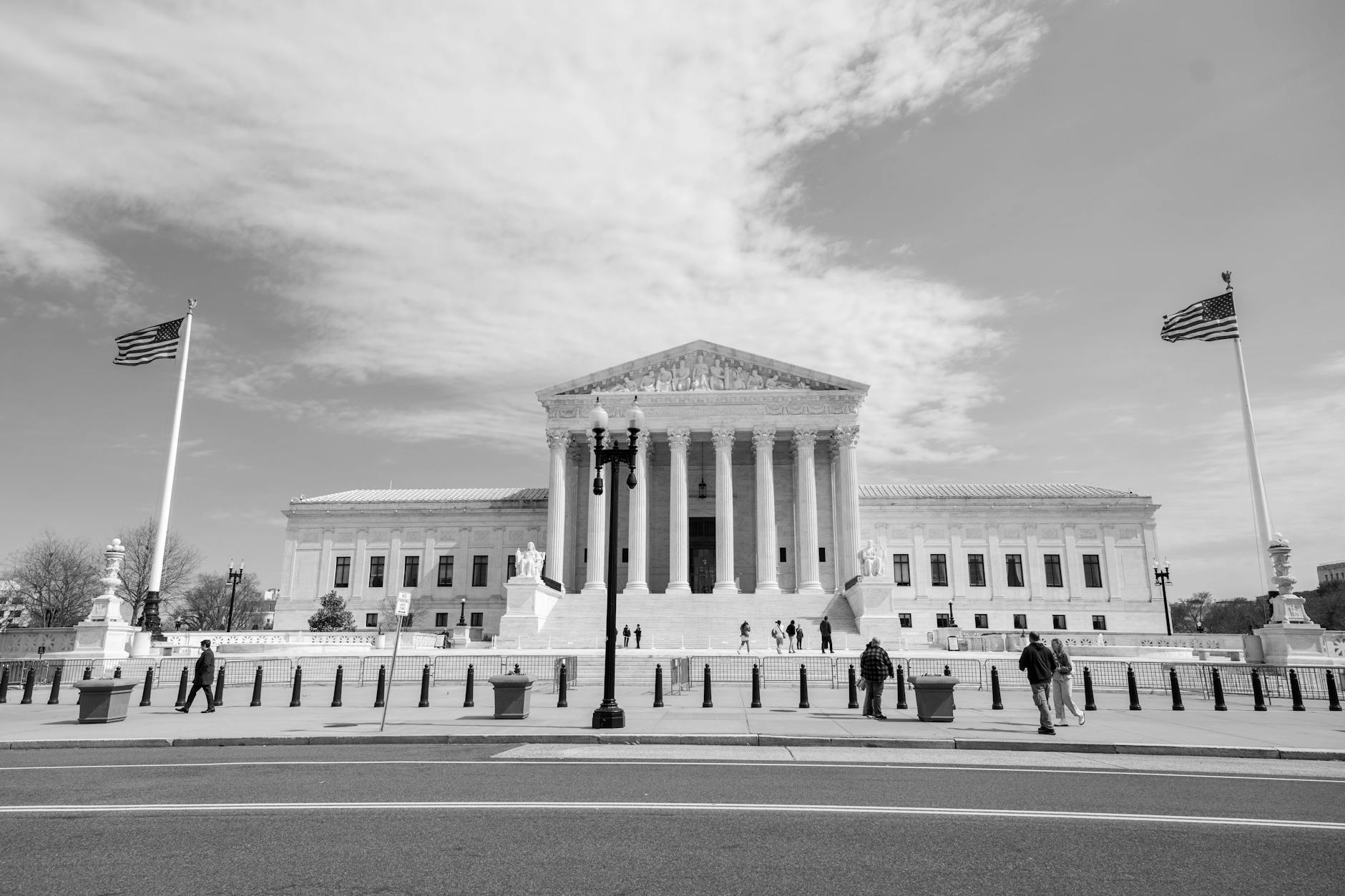
The U.S. Supreme Court has made it harder for music companies to hold internet providers liable for online piracy, throwing out a major copyright verdict against Cox Communications and tightening the legal standards for similar lawsuits.
According to coverage by the Los Angeles Times and Fox Business on Friday, the high court set aside a large damages award that record labels had won against Cox, concluding that the lower courts applied an overly broad view of when an internet provider can be held responsible for customers’ copyright violations.
While specific dollar figures and the full opinion text were not detailed in the available reports, Fox Business described the case as involving a billion‑dollar‑scale verdict, and both outlets framed the decision as a setback for music companies seeking to use copyright law against broadband providers.
What the Supreme Court Decided
Reporting from the Los Angeles Times states that the Supreme Court ruled in favor of Cox, an internet service provider, in a dispute brought by major record companies that accused Cox of contributing to widespread music piracy by its subscribers.
The justices threw out the verdict that had previously gone against Cox, Fox Business reported, and sent a clear signal that plaintiffs must meet a higher bar to show that an internet provider is legally responsible for users’ infringement.
Across the coverage, the core legal issue was whether Cox could be held liable under theories such as “contributory” or “secondary” copyright infringement—doctrines that allow rights holders to sue companies that facilitate or encourage others’ unlawful copying. The Supreme Court’s decision, as described in the reports, narrows how those doctrines can be used against internet access providers.
The New York Times, in separate but related coverage of high court copyright and liability disputes, likewise noted that the justices are scrutinizing efforts to expand liability for companies that provide infrastructure or platforms rather than directly hosting infringing content. Together, the reporting indicates a consistent pattern: the Court is wary of broad theories that would expose providers to sweeping damages based on users’ actions.
How the Case Reached the High Court
The Cox dispute began when record companies accused the cable and internet provider of failing to act against subscribers who repeatedly used its network to share copyrighted music without permission. The labels argued that Cox knew about the infringement and continued to provide service, effectively enabling piracy.
A lower court sided with the record companies and imposed a large monetary award, which Fox Business characterized as a $1 billion copyright verdict. Cox appealed, arguing that it should not be treated as a direct participant in customers’ illegal file sharing and that the legal standards applied by the lower courts were too expansive.
The Supreme Court agreed to hear the case after the verdict drew attention across the tech and entertainment industries. According to the Los Angeles Times, providers and rights holders both saw the dispute as a test of how far copyright law could reach into the operations of internet companies that mainly provide connectivity rather than content.
Why the Ruling Matters for Internet Providers and Rights Holders
By tossing the verdict against Cox, the Supreme Court has raised the bar for suing internet providers over online piracy, according to the Los Angeles Times and Fox Business accounts. The decision signals that rights holders must show more than general awareness that infringement occurs on a network to win large judgments.
For internet providers, the ruling reduces the immediate risk of billion‑dollar‑scale damages based on customers’ behavior, at least under the legal theories presented in this case. Providers had warned, as reported in these outlets, that expansive liability could force them to terminate large numbers of customers or heavily monitor user activity, raising privacy and operational concerns.
For record companies and other rights holders, the decision is a significant setback in efforts to use litigation against access providers as a tool to curb piracy. The reports indicate that the Court’s move will make it more difficult to argue that simply continuing to provide internet service to repeat infringers is enough to trigger massive liability.
The New York Times’ broader reporting on high court decisions involving companies and liability underscores that this Cox ruling fits into a larger judicial trend of limiting when infrastructure or service providers can be held responsible for harms caused by users.
What Remains Unclear
The available reporting from the Los Angeles Times and Fox Business does not provide the full text of the Supreme Court’s opinion, so the precise legal test the justices adopted is not yet clear from these summaries alone.
Key open questions include how much knowledge or involvement an internet provider must have before it can be found to contribute to piracy, and what kinds of internal policies or enforcement steps might protect providers from future claims. The reports agree that the Court made it harder to sue providers, but they do not spell out every element of the new standard.
It is also not fully detailed in the current coverage whether the case is concluded entirely in Cox’s favor or whether some issues may return to the lower courts under the clarified standard. The characterization of the decision as tossing or throwing out the verdict, however, indicates that the previous judgment against Cox cannot stand as originally entered.
What to Watch Next
In the coming weeks, legal analysts and industry groups are expected to study the Supreme Court’s opinion closely to understand how it reshapes liability for internet providers. Trade associations for broadband companies and entertainment firms may issue detailed guidance or position statements once they have reviewed the ruling.
Lawmakers and regulators could also revisit how copyright enforcement works in the context of internet access, especially if rights holders argue that the Court’s decision leaves them with fewer tools to combat piracy. Any concrete legislative proposals or regulatory reviews would likely emerge after stakeholders digest the opinion.
Observers will be watching for follow‑on lawsuits or settlements involving other providers, as companies test how far the new standard reaches. Changes to providers’ customer policies, notice procedures, or termination practices—if they occur—will offer early signs of how the industry is adapting to the Supreme Court’s decision and how much practical protection the ruling gives to internet companies facing piracy claims.