
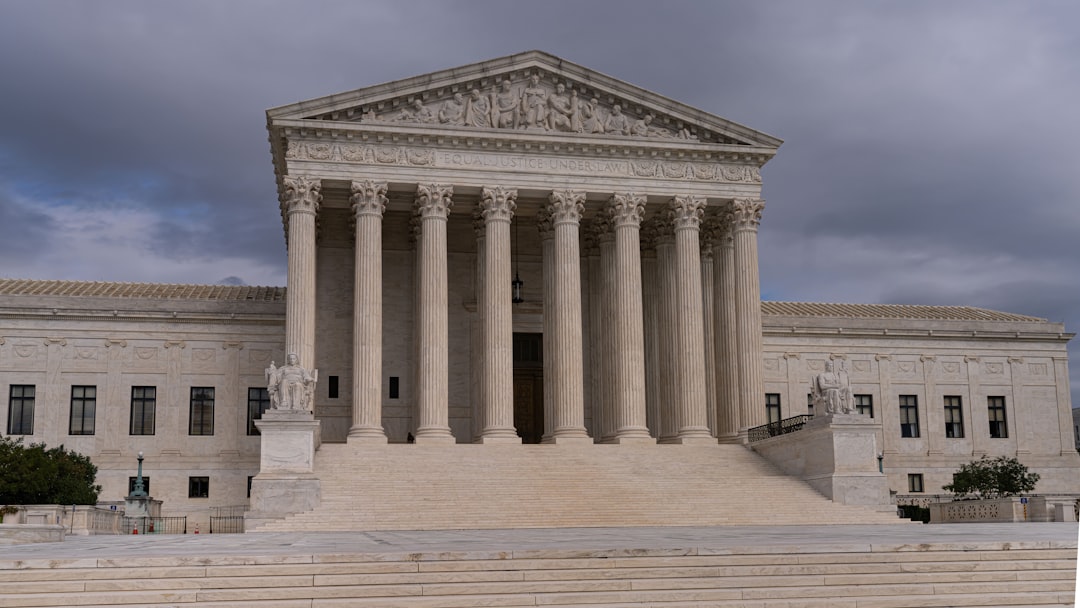
The U.S. Supreme Court has issued a ruling that sharply limits the role of race in drawing congressional districts under the Voting Rights Act, while leaving room for maps shaped by partisan goals, according to reporting by CBS News on May 10.
The decision, as described by CBS News, marks a significant shift in how federal law constrains redistricting. It holds that congressional districts cannot be drawn along racial lines under the Voting Rights Act in the way some challengers had urged, but it does not impose similar restrictions on districts drawn to favor one political party over another.
What the Court Decided
CBS News reports that the Court’s ruling focuses on how race may be used in redistricting under the Voting Rights Act, a landmark 1965 law that was designed to protect minority voters from discrimination.
According to CBS News’ account, the justices rejected efforts to require or justify congressional district lines that are explicitly based on race under that statute. In practice, this means mapmakers may not rely on race as the predominant factor in configuring districts when invoking the Voting Rights Act as a legal basis, as summarized in the CBS report.
At the same time, the Court did not extend similar limits to partisan considerations. CBS News notes that the ruling leaves intact the ability of state legislatures and other map‑drawing bodies to design districts that advance partisan interests, so long as they comply with other existing legal requirements.
The CBS report characterizes this combination of restrictions on race and tolerance of partisan aims as opening a “new era” of gerrymandering, in which political advantage can be pursued more freely so long as it is not explicitly grounded in race under the Voting Rights Act.
Racial vs. Partisan Line‑Drawing
Gerrymandering is the practice of drawing electoral districts to benefit a particular group, often a political party or an incumbent. CBS News explains that the Court’s ruling draws a sharper legal line between racial and partisan gerrymandering.
Under the decision, as described by CBS News, using race as a central organizing principle for districts and defending those lines under the Voting Rights Act faces new limits. The Court’s interpretation narrows how that civil rights law can be invoked to shape districts with explicit racial considerations.
By contrast, the CBS report notes that partisan gerrymandering—drawing maps to help one party and hurt another—remains largely outside the reach of federal courts. The new ruling does not treat partisan motives in the same way as racial motives, leaving political map‑drawing strategies more legally protected than race‑based ones.
Why the Ruling Matters
CBS News reports that the decision is expected to influence how states approach congressional redistricting in the coming cycles. With race‑based line‑drawing under the Voting Rights Act more constrained, and partisan strategies left comparatively unrestrained, state legislatures may have clearer incentives to justify maps in partisan rather than racial terms.
The ruling could affect which voters are grouped together and how competitive certain districts are, CBS News notes, because mapmakers now face a different set of legal risks depending on whether they frame their decisions as racial or partisan.
CBS News characterizes this as ushering in a new phase of gerrymandering, in which partisan objectives can be pursued within a narrower framework for considering race.
What to Watch Next
Because this account is based primarily on CBS News’ May 10 reporting, independent corroboration of specific legal and political effects remains limited and will need to be monitored as additional coverage and analysis emerge.
CBS News indicates that the ruling is likely to shape future legal challenges to congressional maps, particularly those that previously relied on the Voting Rights Act to argue for or against race‑conscious districts. How lower courts apply the Supreme Court’s interpretation, and how state officials adjust their redistricting strategies in response, are expected to be key developments as new maps are drawn and contested.
The decision, as reported by CBS News, signals that federal law will now treat racial and partisan motives in redistricting differently, a change that could influence who represents many voters in Congress and how electoral competition unfolds in the years ahead.