
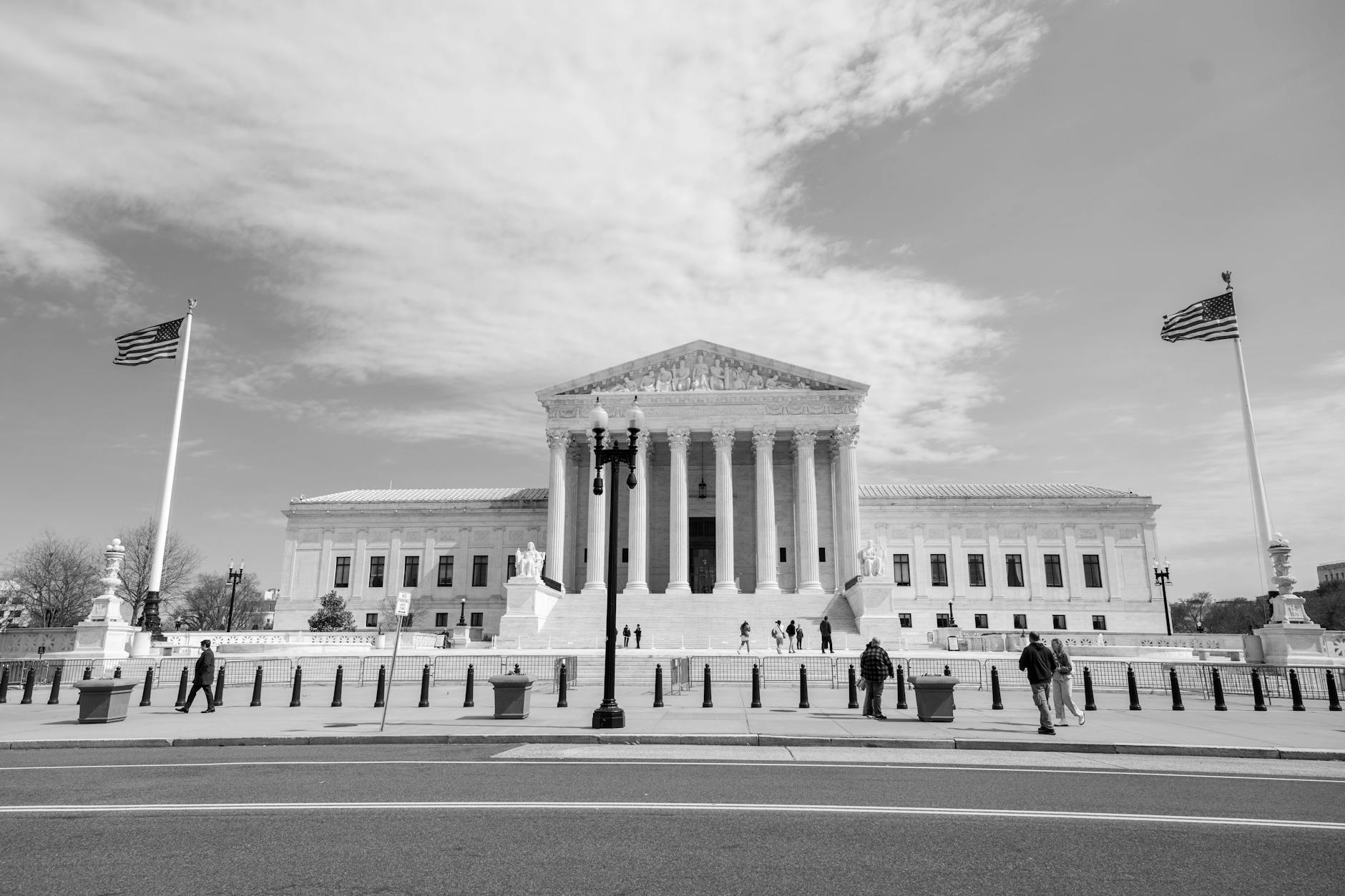
The U.S. Supreme Court has rejected a lawsuit by Florida that targeted how other states license commercial truck drivers who are in the country without legal status, according to reporting from CBS News on May 10. The Court’s move, made without a full written opinion, leaves in place policies in states such as Washington and California that allow certain undocumented immigrants to obtain commercial driver’s licenses.
CBS News reports that Florida had asked the justices for permission to sue those states directly in the Supreme Court, a special procedure the Constitution allows for disputes between states. By declining to take the case, the Court effectively ended Florida’s effort at the threshold.
What the Supreme Court did
According to CBS News, the Supreme Court rejected Florida’s attempt to bring an original lawsuit against other states over their commercial driver’s license rules. The Court did not issue a detailed opinion explaining its reasoning, which is common when it refuses to hear a case.
The decision means the justices declined to open a dispute in which Florida argued that Washington and California were improperly issuing commercial licenses to undocumented immigrants. Because the Supreme Court is the only court that can hear one state’s lawsuit directly against another, the rejection leaves Florida without that legal path.
CBS News notes that the case was one of several orders the Court released the same day, including a separate decision turning away the National Football League’s bid to intervene in a racial discrimination lawsuit. The Florida trucking dispute was resolved at the level of whether the Court would hear it at all, not after a full briefing and argument on the merits.
Florida’s challenge and its target
CBS News reports that Florida’s complaint focused on policies in Washington and California that allow some immigrants without legal status to obtain commercial driver’s licenses. Florida argued that those policies conflicted with federal immigration law and created spillover effects beyond the borders of the issuing states.
In asking the Supreme Court to take the case, Florida sought to frame the dispute as a state-versus-state conflict suitable for the Court’s original jurisdiction. That jurisdiction is a narrow channel the Constitution reserves for certain disputes, such as boundary conflicts or water rights, and the Court has long exercised discretion over whether to accept such cases.
The CBS News account indicates that Florida’s theory was that licensing undocumented commercial drivers in one state affects highway safety and enforcement in others, including Florida, because commercial trucks routinely cross state lines. The justices, by declining to take the case, did not endorse or reject that argument on the merits; they simply refused to open the door to the lawsuit.
Why the rejection matters
The immediate effect of the Court’s move, as reported by CBS News, is that Washington and California can continue their current commercial driver’s license practices without facing this particular challenge from Florida in the Supreme Court.
More broadly, the rejection underscores how difficult it is for one state to use the Supreme Court to attack another state’s policy choices, even when those choices touch on contentious areas like immigration. Because the Court did not issue a merits ruling, it did not set a new nationwide standard for when states may license undocumented immigrants to drive commercial vehicles. Instead, it left existing state-level rules in place.
For Florida, the outcome closes off the specific litigation strategy it pursued here. The state could not, based on this order, force Washington or California to change their licensing regimes through an original action at the Supreme Court.
Limits on state-versus-state immigration fights
CBS News’ reporting on the order highlights that the Court handled Florida’s case the same way it often handles state-versus-state disputes: with a brief order and no explanation. That pattern reflects the Court’s longstanding view that its original docket should remain small.
In practice, that means states face high hurdles when they try to pull the Supreme Court directly into policy conflicts with their peers. In this instance, the Court’s refusal to hear the case leaves immigration-related licensing questions primarily in the hands of Congress, federal regulators, and individual state legislatures, rather than in a direct interstate courtroom fight.
Because the justices did not explain their reasoning, it is not clear from the CBS News account whether they were skeptical of Florida’s legal theory, concerned about opening the door to more interstate policy disputes, or simply unconvinced that this was the right vehicle to address the issues Florida raised.
Stakeholders and what is at stake
The main institutional players in this dispute were the state of Florida, the states it targeted—identified by CBS News as Washington and California—and the Supreme Court itself. Each had different interests.
Florida sought to limit how other states treat undocumented immigrants in the commercial trucking sector, arguing that those choices affect Florida’s roads and enforcement resources. Washington and California, by contrast, have adopted licensing policies that, as described by CBS News, are more accommodating to undocumented residents in certain circumstances, including allowing them to obtain commercial driver’s licenses.
For the Supreme Court, the case raised questions about how far it should go in refereeing disagreements over immigration-adjacent policies between states. By turning the case away, the justices avoided issuing a nationwide rule that could either constrain or validate such state policies across the country.
How likely is formal confirmation in the coming week?
The reader question centers on how likely it is that the Supreme Court’s rejection of Florida’s suit will be formally confirmed in the next week. CBS News already reports that the Court has rejected the case, citing the Court’s public order list issued on May 10.
Supreme Court orders are released in official written form by the Court itself. When CBS News reports that the Court has rejected a case, it is relying on that official document. Because the order has already been issued and reported, the core development—that the Supreme Court rejected Florida’s suit—is not a future possibility but a completed action reflected in the Court’s records.
Given that, the prospect of “formal confirmation” over the next week is best understood as whether additional public documentation or commentary will restate what the order already shows. On the evidence available from CBS News, the key fact is already confirmed by the Court’s own order and by at least two CBS News reports that reference the Supreme Court’s recent rejections of different cases.
What to watch next
The CBS News reporting does not indicate any follow-on proceedings in the Supreme Court for this dispute. With the justices declining to hear Florida’s case, the immediate litigation appears to be over at that level.
The next developments, if any, would likely occur outside the Supreme Court. Florida could consider other legal or political avenues, while Washington and California may continue to administer their commercial driver’s license systems as they have been. Any change to those systems, or any new lawsuit filed in a lower federal court, would be a separate development that would need fresh reporting.
For now, based on the CBS News account, the Supreme Court’s rejection stands as the final word in this particular interstate clash over immigrant truck drivers.