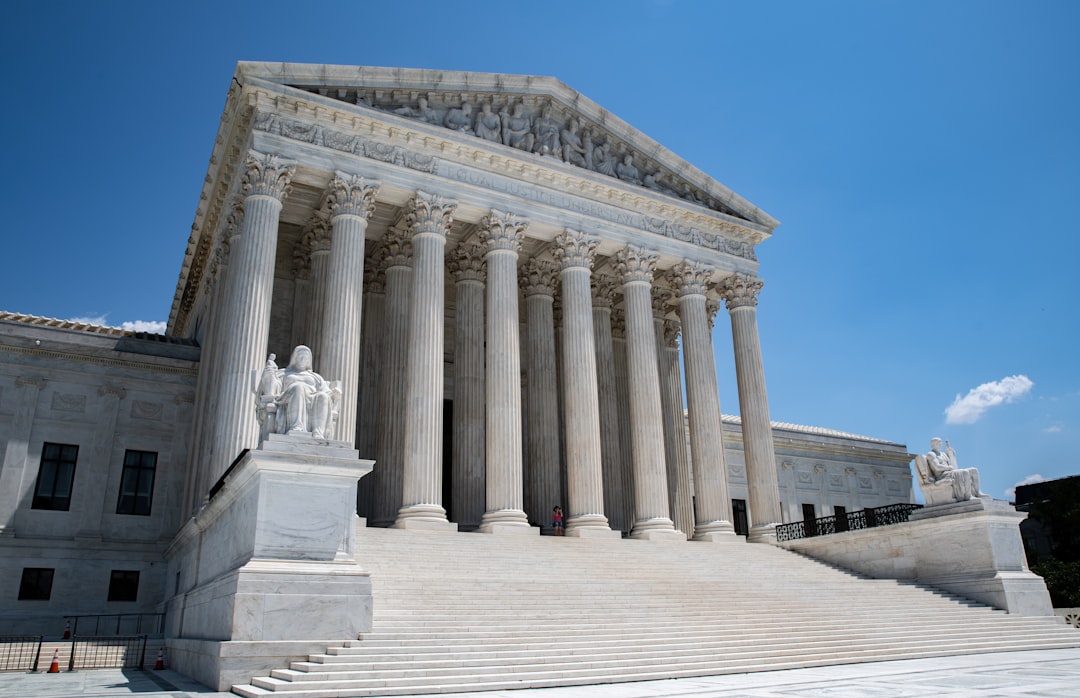
Justice Ketanji Brown Jackson used a public appearance at the University of the District of Columbia’s law school to criticize how the U.S. Supreme Court is handling some of its most consequential disputes, according to reporting by the Guardian. Her remarks came roughly 23 hours ago, in the same news cycle that former president Donald Trump filed his latest request with the Court.
Speaking to students and faculty at the UDC David A. Clarke School of Law in Washington, Jackson said she was concerned about the way the Court is approaching certain high‑profile matters. The Guardian reported that she singled out the Court’s handling of major cases, framing her critique as part of a broader reflection on the Court’s role and responsibilities.
Jackson’s remarks at UDC Law
Jackson, an associate justice since 2022, appeared at UDC Law for a scheduled event where she discussed the Court and the legal system with an audience of law students and academics. The Guardian’s account of the speech states that she directly criticized how the Supreme Court has managed some of its recent work, though the report did not reproduce her full remarks.
According to the Guardian, Jackson’s comments focused on the Court’s handling of significant disputes that carry major public consequences. The article described her as calling out her colleagues over the way these matters are being processed and resolved, but did not attribute specific cases or quotations to her beyond this general critique.
The event took place in Washington, D.C., and was organized by the law school. Jackson’s appearance was part of the school’s public programming, which routinely invites judges and practitioners to speak about the legal system. The Guardian report is the primary public account of what she said during this appearance.
Link to Trump’s latest Supreme Court request
The Guardian noted that Jackson’s criticism came just hours after Trump submitted his latest request to the Supreme Court. That filing, according to the same report, was lodged earlier in the day and is now before the justices for consideration.
The article did not state that Jackson mentioned Trump by name or referred directly to his filing. Instead, it placed her speech and Trump’s request in the same timeline, underscoring that her public comments about the Court’s handling of important matters arrived as the justices face another politically charged dispute involving the former president.
Because the Guardian report is the main source describing both the timing and content of Jackson’s remarks, there is limited independent corroboration at this stage. No additional outlets were cited in that coverage as having separately verified her comments.
Concerns about the Court’s approach
In its account, the Guardian reported that Jackson’s remarks amounted to a critique of how the Supreme Court is dealing with some of its most consequential cases. The story characterized her as questioning aspects of the Court’s approach, though it did not provide a detailed breakdown of the specific procedures or doctrines she had in mind.
The report did not indicate that Jackson proposed particular reforms or outlined a detailed alternative process. Instead, it described her as raising concerns about how the Court is exercising its authority in cases that could shape public life. The Guardian framed these comments as notable because they came from a sitting justice speaking in a public forum.
The article also did not specify whether other justices have responded to Jackson’s remarks or whether the Court’s public information office has commented. As of the Guardian’s publication, Jackson’s speech stood as a rare, on‑the‑record critique from within the Court about its own handling of major disputes.
Why Congress and the public are watching
The Guardian’s reporting linked Jackson’s comments to wider attention on the Supreme Court from Congress and the public. Lawmakers have been closely tracking the Court’s decisions and case management in high‑impact disputes, including those involving Trump, although the article did not detail specific legislative actions tied to this particular speech.
By highlighting Jackson’s concerns about how the Court is handling key matters, the Guardian suggested that internal unease may overlap with external scrutiny from Congress. The report did not say that Jackson addressed Congress directly or called for legislative intervention, but it placed her remarks in a climate where the Court’s choices are under sustained review by elected officials.
Public interest in the Court’s work is also high, especially in cases involving national politics and former presidents. The Guardian positioned Jackson’s speech as part of that larger environment, in which the Court’s decisions and timing can affect public services, policy implementation, and institutional trust. The article did not, however, provide specific examples of policies or programs already altered by the disputes she referenced.
What this development signals
Based on the Guardian’s account, Jackson’s appearance at UDC Law marked an unusual moment in which a sitting justice openly questioned aspects of the Supreme Court’s handling of major disputes. Her remarks, delivered just hours after Trump’s latest request reached the Court, underscored the pressure the institution faces as it manages politically sensitive cases.
With only one primary report publicly describing her comments so far, the full scope and impact of Jackson’s critique remain to be seen. Lawmakers, legal observers, and the public are likely to watch how the Court proceeds in the high‑stakes matters now before it, and whether other justices respond publicly or adjust how they discuss the Court’s internal processes.