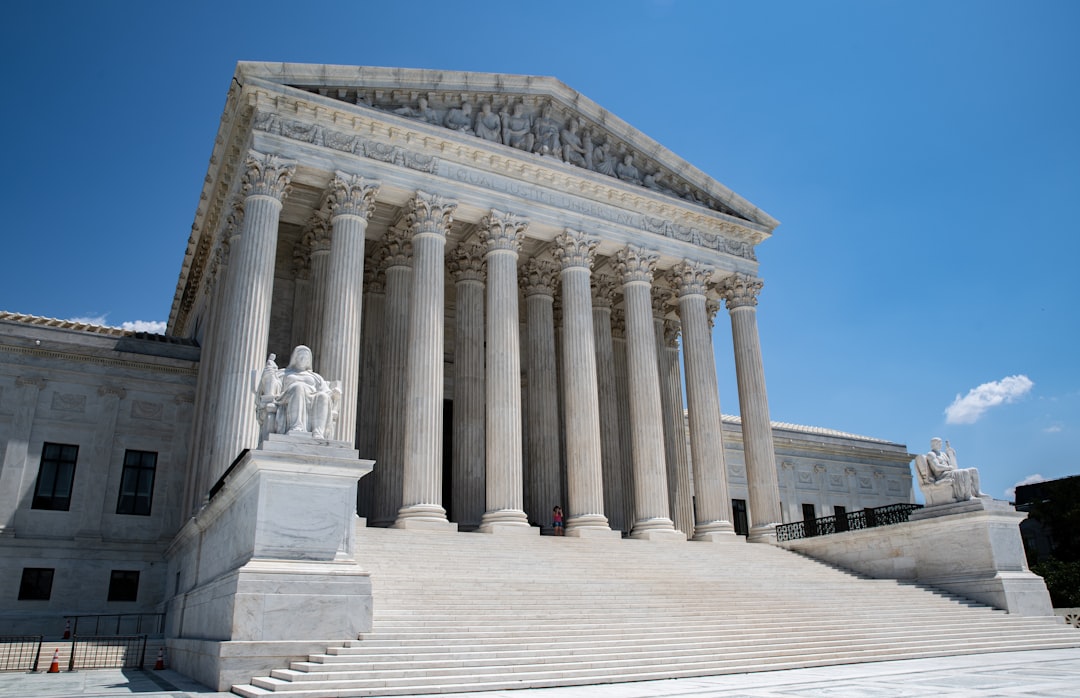
Shawn Montgomery was sitting in a parked vehicle when a semi tractor-trailer slammed into him, costing him part of his leg. On Thursday, the US supreme court said he can try to hold not just the driver and trucking company responsible, but also a major logistics broker that helped arrange the shipment.
In a unanimous decision reported by the Guardian, the court cleared the way for Montgomery’s lawsuit against the freight broker to proceed. The ruling does not decide whether the broker is actually liable, but it rejects an attempt to block his claim at the threshold. That procedural move carries outsized significance for how responsibility is allocated in the sprawling, often opaque world of commercial trucking.
What the court decided — and what it did not
According to reporting from the Guardian, the supreme court ruled that Montgomery may sue a top US freight broker over the crash that led to his partial leg amputation. The company had argued that federal law should shield it from this kind of state-law negligence claim.
The justices, however, unanimously allowed Montgomery’s case to go forward. That means:
- The lawsuit is not being thrown out at this early stage.
- The freight broker must now face Montgomery’s allegations in court.
- A lower court will still have to determine the facts and decide whether the broker is legally responsible for his injuries.
The ruling is therefore about access to the courthouse, not a final judgment on fault. The Guardian’s account makes clear that the decision concerns whether Montgomery is allowed to sue the broker, not whether he will ultimately win.
How a parked car crash reached the highest court
As described in the Guardian’s coverage, Montgomery was in a parked vehicle when a speeding semi tractor-trailer hit him. The crash was severe enough that he lost part of his leg.
In many traffic injury cases, the legal focus stays on the driver and the trucking company that employs or contracts with that driver. Montgomery’s case adds another layer: he alleges that a major logistics firm — a freight broker that coordinates shipments between shippers and trucking carriers — should also bear responsibility.
The broker’s role, as outlined in the Guardian report, was to arrange the freight movement that ultimately involved the truck that hit Montgomery. His lawsuit argues that the broker’s decisions contributed to putting an unsafe driver or carrier on the road, though the supreme court ruling itself, as reported, centers on whether such a claim can be heard rather than on the factual merits of those allegations.
Why a freight broker’s liability matters
The Guardian notes that the decision could have “ripple effects across the trucking industry.” That assessment reflects how central freight brokers have become in US shipping.
Brokers typically do not own trucks or employ drivers. Instead, they match shippers with motor carriers, taking a fee to arrange the transport. For years, many brokers have argued that this intermediary role should insulate them from personal-injury suits when a crash occurs.
By allowing Montgomery’s suit to move forward, the supreme court has signaled that, at least in some circumstances, that insulation is not absolute. The court’s unanimous stance, as reported, suggests a shared view that federal law does not categorically bar injured people from bringing negligence claims against brokers in state courts.
For Montgomery, this opens the possibility of recovering damages from a deep-pocketed entity that helped organize the shipment tied to his injury. For the broker, it means facing discovery, potential trial, and the possibility of a damages award or settlement.
Legal stakes: federal rules vs. state negligence claims
While the Guardian article does not walk through the full statutory framework, it makes clear that the freight broker had argued it was shielded from this kind of lawsuit. That position typically rests on the idea that federal transportation law preempts, or overrides, certain state regulations and claims.
By unanimously rejecting the broker’s attempt to shut down Montgomery’s case at the outset, the justices have reinforced the space for state-level negligence law to operate alongside federal trucking rules. The Guardian’s reporting emphasizes that the decision is unanimous, underscoring that this was not a narrow ideological split but a shared interpretation across the court.
The practical effect is that plaintiffs like Montgomery can at least test their claims against brokers in court, rather than being blocked at the starting gate by a broad reading of federal preemption.
Human impact at the center of a technical dispute
Behind the legal abstractions is Montgomery himself, a man who, according to the Guardian, lost part of his leg after a speeding semi hit his parked vehicle. The ruling does not restore what he lost, and it does not guarantee compensation. But it does give him a chance to argue that a powerful company, not just an individual driver or a smaller carrier, should be held to account.
The supreme court’s decision places his experience at the center of a question that might otherwise seem purely technical: who bears responsibility when a complex chain of contracts and logistics ends in a life-altering crash?
By keeping the courthouse doors open to his claim, the justices have ensured that the answer will not be dictated solely by industry structure or federal legal shields, but will instead be worked out through evidence, testimony, and state-law standards of care.
Potential ripple effects for the trucking industry
The Guardian reports that the ruling “could have ripple effects across the trucking industry.” That assessment reflects concern that brokers may now face more lawsuits when trucks involved in their arranged shipments crash.
If more injured motorists follow Montgomery’s path and sue brokers alongside drivers and carriers, several consequences are plausible:
- Greater legal exposure for brokers: Companies that once felt largely insulated from crash litigation could see more claims testing whether their vetting or selection of carriers was negligent.
- Changes in how freight is arranged: To limit risk, brokers may adjust how they choose carriers, how they document safety practices, or how they structure contracts. The Guardian’s reporting does not detail such changes, but industry observers are likely to watch for them.
- Pressure on insurance and costs: More potential liability can translate into higher insurance premiums and legal expenses, though the Guardian article does not quantify these effects.
Because the supreme court’s ruling is about allowing suits rather than deciding their outcomes, the ultimate scale of these ripple effects will depend on how lower courts handle cases like Montgomery’s and how often plaintiffs succeed.
What to watch next
The Guardian’s account makes clear that Montgomery’s legal journey is not over. With the supreme court’s ruling, his case now returns to the lower courts, where several key questions remain:
- Can Montgomery prove the broker was negligent? He will need to show, under applicable state law, that the broker’s conduct fell below a reasonable standard of care and contributed to his injury.
- How will lower courts interpret the ruling? Judges will have to apply the supreme court’s reasoning to the specific facts of Montgomery’s case and, over time, to other broker-related cases.
- Will similar lawsuits follow? If other injured motorists see Montgomery’s case as a model, brokers could face a wave of new claims testing the boundaries of their responsibility.
For now, the supreme court has delivered a clear message: a man whose life was reshaped by a truck crash gets to ask a powerful logistics company to answer, in court, for its part in putting that truck on the road. How that question is ultimately resolved will shape not only Montgomery’s future, but also how accountability is distributed across the modern freight system.