
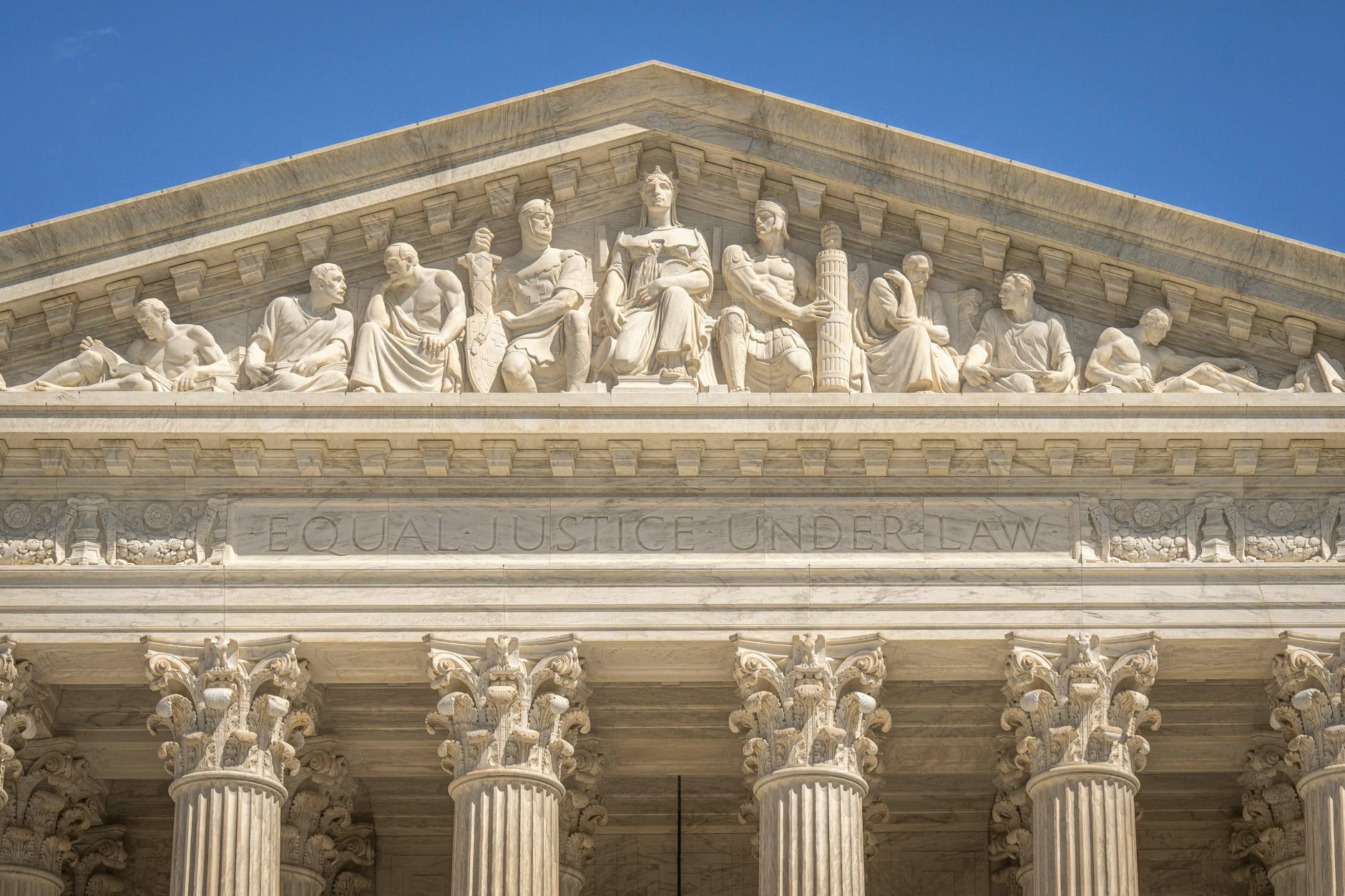
The US Supreme Court on Tuesday upheld state laws that bar transgender athletes from competing in girls’ and women’s sports, according to reporting from NBC News and the Guardian. The decision marks a significant setback for LGBTQ rights advocates, who had urged the justices to block the restrictions while legal challenges continued in lower courts.
Multiple outlets, including NBC News and the Guardian, reported that the Court allowed the challenged state laws to remain in force, effectively siding with lawmakers who argued that restricting participation based on sex assigned at birth is necessary to preserve what they describe as fairness in girls’ and women’s athletics.
While the full written opinion and vote breakdown were not detailed in the initial coverage, the rulings described by these outlets mean the bans remain operative and that transgender girls and women in the affected states cannot compete on girls’ or women’s teams in the covered sports while the litigation proceeds.
What the Supreme Court decided
NBC News reported that the Supreme Court upheld laws that specifically prohibit transgender athletes from playing on girls’ and women’s teams, focusing on school and youth sports. The Guardian similarly described the decision as the Court upholding state bans on transgender athletes in girls’ and women’s sports.
The coverage indicates that the Court declined to strike down or suspend the laws, leaving them in place. In practical terms, that means the justices did not accept arguments from challengers that the bans should be halted immediately on constitutional or federal civil rights grounds while the cases are still being argued in lower courts.
The Guardian’s explainer on the ruling noted that the case centered on whether states may enforce categorical restrictions that define eligibility for girls’ and women’s teams by sex assigned at birth rather than gender identity. By upholding the laws at this stage, the Court has signaled that, for now, states may continue to enforce those definitions in the covered programs.
Because the early reporting does not include the full text of the Court’s reasoning, it is not yet clear how broadly the justices framed the legal questions or how they interpreted federal protections such as Title IX, the federal law that bars sex discrimination in education. Those details typically become clearer once the written opinions are released and analyzed.
How the case reached the Court
According to NBC News and the Guardian, the dispute arose after several states enacted laws restricting participation in girls’ and women’s sports to athletes whose sex assigned at birth is female. Civil rights groups and individual transgender students challenged those measures in federal court, arguing that the bans discriminate on the basis of sex and gender identity.
Lower courts issued differing rulings on whether the laws could take effect while the underlying constitutional and statutory questions were litigated. That split set the stage for emergency appeals to the Supreme Court, which was asked either to block enforcement of the bans or to allow them to remain in place.
Tuesday’s decision, as described by the outlets, resolves that immediate question in favor of the states that enacted the restrictions, at least for now. The underlying lawsuits over whether the bans violate federal law are expected to continue in the lower courts.
Arguments over fairness and inclusion
Reporting from NBC News and the Guardian indicates that supporters of the bans, including the states defending the laws, argued that restricting participation to athletes whose sex assigned at birth is female is necessary to maintain competitive balance and protect opportunities for cisgender girls and women.
Challengers, including transgender athletes and civil rights advocates, argued that the laws single out transgender students for unequal treatment and conflict with federal protections against sex discrimination. They contended that blanket bans ignore the diversity of athletic ability among all athletes and stigmatize transgender youth.
Early coverage described the ruling as another significant blow to LGBTQ rights, reflecting advocates’ concern that the Court’s decision to leave the bans in place will encourage additional restrictions at the state level and narrow the practical reach of earlier decisions that expanded protections for LGBTQ people in employment and other areas.
Who is affected and what is at stake
Based on the descriptions in NBC News and the Guardian, the decision directly affects transgender girls and women in states that have enacted and are enforcing bans on their participation in girls’ and women’s sports. In those states, affected students are barred from competing on teams that match their gender identity in the covered programs.
School districts, athletic associations, and state education agencies in those jurisdictions now have clear Supreme Court backing, at least for the moment, to continue enforcing the bans as written. That could influence how administrators handle team eligibility disputes and how they respond to requests for accommodations.
The ruling also has implications for ongoing debates over how Title IX applies to transgender students. While the current reporting does not detail how the Court interpreted Title IX in this case, advocates on both sides view the decision as a signal of how receptive the justices may be to future challenges involving transgender students’ access to school programs.
The Guardian’s coverage framed the ruling as part of a broader pattern of recent Supreme Court decisions that have narrowed or limited expansions of LGBTQ protections, though the article did not enumerate each prior case. That framing underscores why advocacy groups regard Tuesday’s decision as especially consequential.
Reaction from key institutions
Initial coverage focused primarily on the Court’s action and its legal effect and did not yet include extensive reaction from all major stakeholders. However, both NBC News and the Guardian described the ruling as a major development for LGBTQ rights advocates and for state officials who have pushed for restrictions on transgender participation in sports.
The prompt for this article notes the NBA among the institutions involved in the broader reaction to the ruling. The available reporting from NBC News and the Guardian, however, does not specifically describe any formal response from the NBA or detail how the professional basketball league is engaging with this particular decision. Without direct sourcing, it is not possible to accurately report the league’s position or actions.
More comprehensive statements from civil rights organizations, education groups, and sports bodies are likely to emerge as they review the decision and its implications. Those reactions typically help clarify how the ruling may influence policies beyond the immediate parties to the case.
What to watch next in the coming days
In the next 24 to 72 hours, legal analysts and advocacy groups are expected to closely examine the Court’s written decision once it is fully available, looking for how the justices framed key questions about sex discrimination and athletic eligibility. Their analyses may clarify whether the ruling is narrowly tied to the specific state laws at issue or signals a broader approach to future transgender rights cases.
States with similar or pending legislation are also likely to review the decision to assess whether their own policies align with the Court’s reasoning as described in NBC News and the Guardian. That process could prompt rapid guidance from state education departments and athletic associations about how they will apply the ruling during upcoming school sports seasons.
Finally, attention will turn back to the lower federal courts, where the underlying challenges to the bans will continue. Upcoming hearings and rulings in those cases may further define the legal boundaries for how schools and sports programs can treat transgender athletes, building on the Supreme Court’s decision to leave the current bans in place.