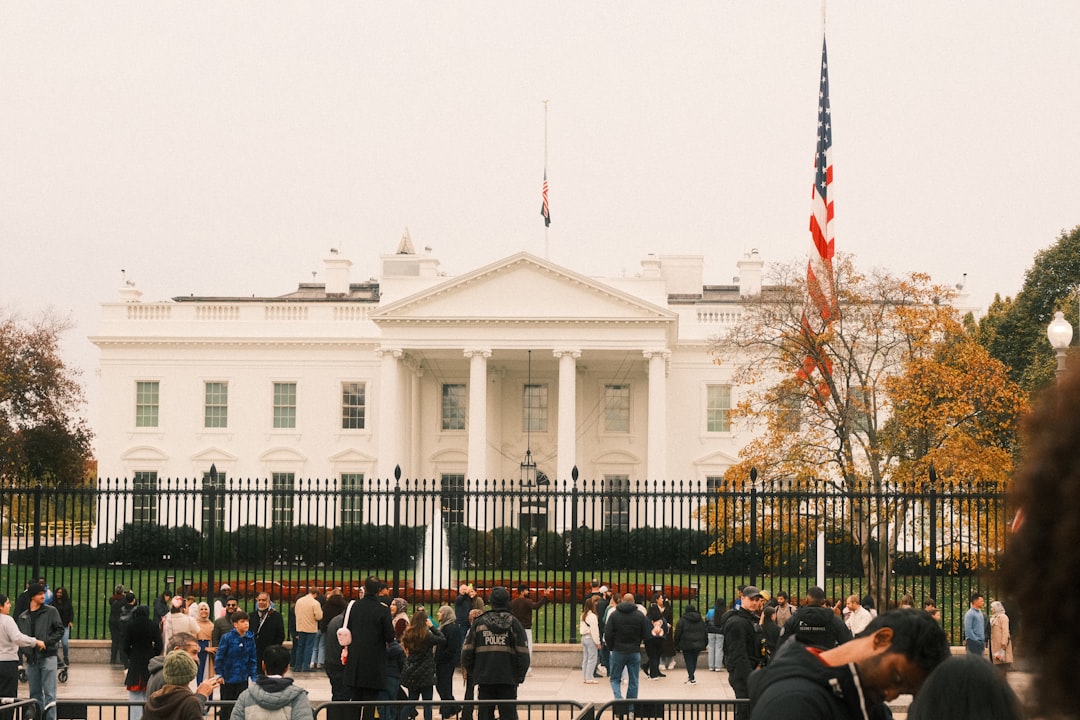
A federal lawsuit is seeking to block a planned Ultimate Fighting Championship (UFC) event at the White House on June 14, the 78th birthday of former President Donald J. Trump, arguing that the spectacle was unlawfully arranged to promote him personally rather than serve any legitimate government purpose.
The case, described in reporting by the New York Times, the Guardian and Politico, places a made-for-television fight card on the South Lawn at the center of a legal and ethical dispute over how far a sitting administration can go in using the White House as a political stage.
At stake is not only whether the UFC event goes ahead, but how courts interpret the line between official government functions and partisan or personal promotion when federal property is involved.
What the Lawsuit Claims
According to the New York Times’ event-focused account, the lawsuit contends that the planned UFC fights at the White House were “unlawfully planned and designed to benefit” Trump. The plaintiffs argue that the event is structured less as a public or ceremonial function and more as a political showcase tied to the former president’s birthday.
Politico’s reporting similarly describes a suit that seeks to halt a UFC fight card on the White House South Lawn, emphasizing that the legal challenge centers on the use of government property and resources for what plaintiffs see as a partisan or personal celebration.
The Guardian’s coverage frames the filing as an attempt to block the event outright, underscoring that the legal complaint repeatedly cites the White House setting, the timing on Trump’s birthday, and the involvement of a high-profile commercial sports brand as evidence that the event is promotional in nature.
While the publicly reported descriptions of the lawsuit do not yet spell out every statute invoked, the core allegation is consistent across outlets: that federal power and federal space are being leveraged to stage a spectacle that primarily benefits one political figure.
Why a UFC Event at the White House Matters
On its face, a sports event on the South Lawn could be dismissed as another made-for-camera backdrop in a media-saturated political era. But the lawsuit treats it as something more consequential: a test of whether the White House can be used as a quasi-private venue for a commercial brand and a political personality.
The Times, the Guardian and Politico each highlight the symbolic weight of the location. The South Lawn has long been used for official ceremonies, state events and national observances. Turning it into a UFC arena on a former president’s birthday raises questions about whether the event is primarily ceremonial, promotional, or political.
If a court finds that the event crosses legal lines, it could set a practical constraint on how future administrations design high-profile spectacles on federal property. If the challenge fails, it may effectively ratify a broader reading of what counts as permissible use of the White House for branded or personality-driven events.
Who Is Involved and What They Stand to Gain or Lose
The reporting so far centers three main actors: the White House, the UFC, and Trump himself.
The White House is described as the host venue and organizing authority for the event. While coverage does not detail every official involved, it makes clear that federal decision-makers approved a South Lawn fight card tied to Trump’s birthday. For the administration, the upside is a visually striking event that could energize supporters and draw massive media attention. The downside is legal exposure and the perception that public property is being used as a partisan stage.
For the UFC, as described across the three outlets, the event offers unparalleled visibility: a fight night at one of the most recognizable pieces of real estate in the world. The organization could benefit from association with political power and the spectacle of a White House card. But being named in a legal challenge also risks reputational fallout and potential logistical disruption if courts intervene close to the event date.
Trump is at the center of the plaintiffs’ theory of harm. The lawsuit, as summarized by the New York Times and echoed by the Guardian and Politico, argues that the event is timed and designed to benefit him personally. If the event proceeds, he stands to gain a powerful televised moment on his birthday, reinforcing his image as a showman surrounded by loyal allies and major brands. If the event is blocked, it may feed a narrative of persecution that he has often used to galvanize supporters, but it would also deprive him of a carefully choreographed visual moment.
The plaintiffs—whose detailed identities and affiliations are not fully spelled out in the summarized coverage—stand to gain a legal precedent limiting what they see as the politicization of the White House. They also risk being portrayed as attempting to shut down entertainment and public events for political reasons.
The Legal Questions at the Core
Although the reporting does not publish the full legal brief, several themes emerge from how the suit is described.
First, there is the question of whether federal property is being used primarily for private or partisan benefit. The repeated references in all three outlets to the White House, Trump and the UFC suggest that plaintiffs are arguing that the event is not a neutral public celebration but a branded, personality-centered show.
Second, there is an implied concern about government resources. Hosting a UFC event on the South Lawn likely involves security, logistics, and staff time. The lawsuit, as characterized by the New York Times and Politico, appears to treat that expenditure of public resources as improper when tied so directly to one political figure’s birthday.
Third, timing matters. By anchoring the event to June 14, Trump’s birthday, the plaintiffs are arguing that the date itself is evidence of intent. The Guardian’s framing—that the event is planned “on Trump’s birthday”—highlights how central the timing is to the plaintiffs’ narrative that this is a personal celebration cloaked in official trappings.
Without the full text of the complaint, it is not yet clear which specific statutes or constitutional provisions are being invoked. That uncertainty limits how precisely observers can predict the legal outcome. But the consistent reporting that the event is alleged to be “unlawfully planned” to benefit Trump indicates that the plaintiffs believe existing law already draws a line that this event crosses.
How Likely Is the Lawsuit to Succeed Quickly?
The reader question—how likely is this lawsuit to be formally confirmed or to stop the event in the next week—runs into a basic problem: the available reporting does not include any judicial responses, hearing dates, or early rulings.
All three outlets agree on the same core facts: a lawsuit has been filed; it targets a UFC event on the White House South Lawn on June 14; and it alleges that the event is unlawfully designed to benefit Trump. None of the coverage, however, cites a judge’s comments, a scheduled injunction hearing, or a timeline for initial court action.
That means any precise probability estimate would be speculative. What can be said, based on how similar disputes often unfold, is that plaintiffs typically seek a temporary restraining order or preliminary injunction when they want to stop an imminent event. If such a request has been filed, a court could move quickly, but the reporting summarized here does not confirm whether that step has occurred or how the court has responded.
Given that gap, the only evidence-backed conclusion is that the lawsuit is real, active, and specifically aimed at halting the June 14 event—but its short-term prospects remain uncertain.
What This Signals About the Modern White House Stage
Even without a ruling, the lawsuit underscores how the modern presidency has become intertwined with entertainment and commercial brands. A UFC fight card at the White House is not a routine policy announcement; it is a stylized, high-energy show designed for cameras and social media.
The legal challenge suggests there is still a constituency that wants a firmer boundary between the symbolic home of the presidency and the world of commercial spectacle. The fact that three major outlets—nytimes.com, theguardian.com, and politico.com—are all covering the suit indicates that the question resonates beyond a niche legal audience.
If courts eventually side with the plaintiffs, future administrations may think twice before hosting similarly branded events on federal property, particularly when they coincide with personal milestones of political figures. If the suit fails or is dismissed quickly, it may encourage more aggressive staging of entertainment-driven events at the White House, with the UFC case serving as an informal green light.
What to Watch in the Coming Weeks
Over the next several weeks, a few developments will determine how this story unfolds.
First, any court scheduling decisions will be crucial. If a judge sets a rapid hearing on a temporary restraining order or preliminary injunction, that could signal that the lawsuit has at least cleared the threshold of being taken seriously on an emergency basis. If no such hearing appears on the docket, the event may proceed before the underlying legal questions are resolved.
Second, public statements from the White House and the UFC could clarify how they justify the event. If they frame it as a nonpartisan celebration, a public outreach effort, or a cultural showcase, that could shape how courts and the public interpret its purpose. If they lean into its connection to Trump’s birthday, that might strengthen the plaintiffs’ narrative about personal benefit.
Third, any amendments to the lawsuit or additional plaintiffs could expand its scope. New legal theories or broader claims about the use of federal property might make the case more complex and lengthen the timeline.
Several scenarios are plausible. The court could grant a temporary order halting preparations, forcing the White House and UFC to postpone or relocate the fights. It could decline emergency relief but allow the underlying case to proceed, meaning the June 14 event happens while the legal battle continues. Or the suit could be dismissed at an early stage if the judge finds the plaintiffs lack standing or that the law does not support their claims.
Because the available reporting does not include the court’s initial reaction or a detailed procedural timeline, any prediction remains tentative. What is clear is that this lawsuit has already turned a planned birthday fight night into a test case for how far political showmanship can extend onto the South Lawn—and whether there is still a legal limit to what the White House can host in the name of spectacle.