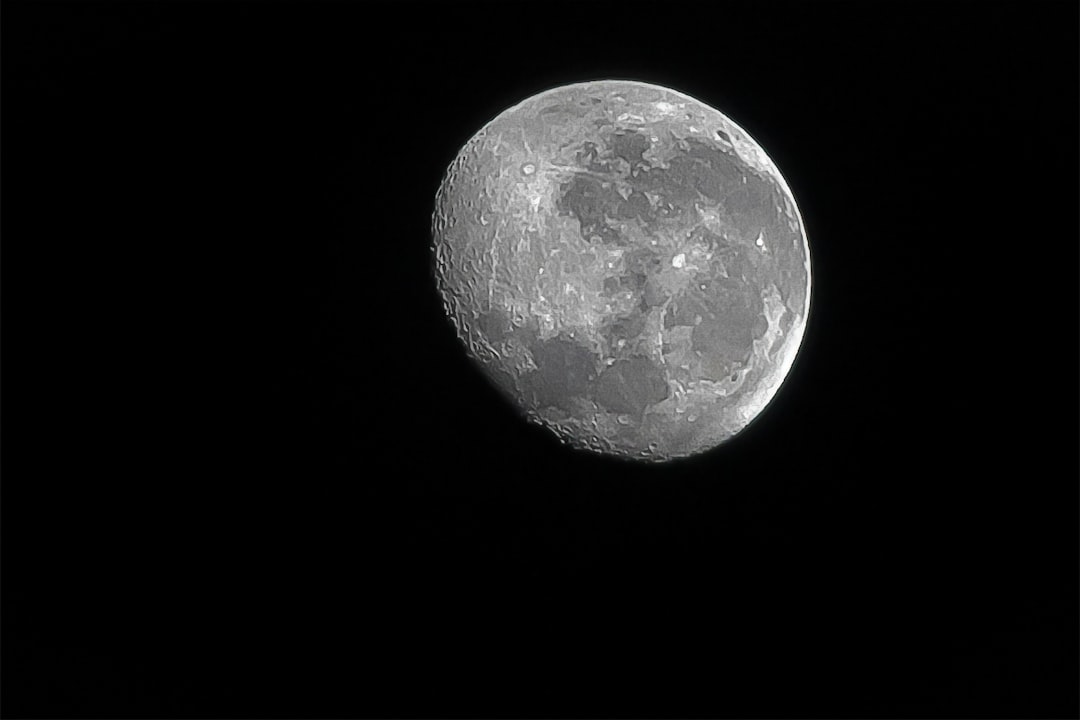
NASA’s Artemis II astronauts have captured a new image of the far side of the Moon, a view humans on Earth never see directly. The agency released the photograph on Sunday, presenting it as part of the mission’s ongoing journey around the Moon.
While the picture itself is striking, its real importance lies in what it quietly confirms: Artemis II is progressing through a sequence of tightly planned steps, and each one narrows the range of what NASA is likely to decide next.
This article unpacks what this new image tells us about the mission’s status, what decisions are coming, and which concrete next move is most likely to be confirmed.
What happened: a new human-taken view of the far side
CBS News reports that the crew of NASA’s Artemis II mission captured a new photograph of the Moon’s far side, which the agency released on Sunday. Coverage across three outlets, including CBS News and the Maitland Mercury, consistently describes the same development: the Artemis II crew, on their lunar journey, took and shared an image from the hemisphere that never faces Earth.
The “far side” of the Moon is the half that is permanently turned away from Earth because the Moon is tidally locked—its rotation period matches its orbit around our planet. Spacecraft have imaged this region for decades, but photographs taken by astronauts during an active mission carry a different weight. They act as visual proof points that the crew, spacecraft, and trajectory are all performing as planned.
Across the reporting, several elements repeat:
- The event is tied to the Artemis program, NASA’s multi-mission effort to return humans to the Moon.
- The timing is anchored to Sunday, when NASA released the image.
- The actors are consistently described as the Artemis II crew.
- The setting is the Moon, specifically the far side.
Together, those details make the photo a clear waypoint in the mission timeline rather than a standalone publicity moment.
Why this image matters beyond symbolism
On its face, a new lunar image might sound routine. Robotic probes have mapped the Moon’s surface at much higher resolution than a handheld camera can provide. But in human spaceflight, images serve a different function: they are evidence that a complex chain of systems is working together in real time.
From the available reporting, several implications emerge:
Trajectory confirmation
To photograph the far side, the crew must be on a path that takes them behind or around the Moon relative to Earth. That implies the spacecraft has completed at least one major navigation step correctly. While the articles do not detail the exact orbital mechanics, the repeated references to the crew closing in on the Moon and racing to set a distance record from Earth, as reported by CBS News and the Maitland Mercury, frame the photo as part of a deep-space leg of the mission.Operational tempo
The image release on Sunday suggests NASA is following a communication rhythm: as the mission hits recognizable milestones—approach, far-side passage, record distances—it surfaces new visuals and anecdotes. That pattern often aligns with internal checklists. When NASA is confident enough in a mission phase to publicize it, it usually means key technical gates have been passed.Human-in-the-loop validation
A crew member taking and sending a photo is a small but telling act. It shows that life-support, power, communications, and onboard procedures are functioning well enough that astronauts can perform non-essential tasks. In a test-heavy mission like Artemis II, that is a quiet indicator of margin—extra capacity beyond bare survival.
In short, the image is less about new scientific discovery and more about confirming that the human and hardware elements of Artemis II are behaving as designed in lunar space.
The mission spine: where Artemis II sits right now
Artemis II is designed as a crewed flight around the Moon rather than a landing. Based on the reporting, the mission has reached the stage where the spacecraft is near or at its maximum distance from Earth, with the crew capturing views of the Moon’s far side.
CBS News coverage notes the astronauts are closing in on the Moon and encountering “Easter eggs” in the spacecraft—small hidden details or design touches—while another CBS report and the Maitland Mercury describe the crew racing to set a distance record from Earth. These elements place the new photo at a moment when the mission is transitioning from outbound cruise to its deepest-space segment.
Within that spine, the far-side photo marks a pivot point:
- The spacecraft has already executed at least one major burn to reach the lunar vicinity.
- The crew is far enough from Earth to see the Moon from angles impossible from the ground.
- NASA is confident enough in the mission status to share new imagery publicly.
From here, the remaining major steps—swinging past the Moon, beginning the return leg, and re-entering Earth’s atmosphere—depend on the same systems that have already carried the crew this far. That continuity is what makes the next likely decision relatively predictable.
What NASA has effectively confirmed already
Even with limited public technical detail, the pattern of events around the photo lets us infer several things NASA has effectively confirmed through action rather than press releases.
1. The spacecraft is performing to plan in deep space
If there were serious anomalies affecting navigation or crew safety, NASA would typically adjust its public posture—delaying non-essential imagery, emphasizing troubleshooting, or acknowledging issues. Instead, the agency released a visually compelling far-side image and allowed media to focus on distance records and small human-interest details aboard the spacecraft.
That does not guarantee the absence of minor problems, but it strongly suggests the mission is within expected parameters.
2. The mission profile remains intact
The consistent references to the crew approaching or being near the Moon, and to the distance record, imply that Artemis II is still flying its intended long-loop trajectory rather than a sharply shortened or aborted path.
A major deviation—such as an early return—would likely be reflected in the tone and content of coverage. Instead, the far-side photo aligns with the originally described arc of a lunar flyaround.
3. NASA is leaning into Artemis as a narrative
By highlighting both the technical milestone (far-side imagery) and the human elements (crew experiences, hidden “Easter eggs” in the spacecraft), NASA is reinforcing Artemis as a sustained story rather than a one-off stunt. That narrative framing matters for understanding what decisions are likely to be announced next: they will probably build on the sense of a mission progressing step by step, not improvising.
Who is affected and what is at stake
The immediate stakeholders in this phase of Artemis II are relatively contained, but their interests differ.
The Artemis II crew
For the astronauts, the successful capture and transmission of a far-side image is a sign that their mission is unfolding as trained. Each completed phase reduces uncertainty about their route home, even as they reach record distances from Earth.NASA mission teams
Flight controllers, engineers, and program managers gain valuable data from every maneuver and system behavior in lunar space. A clean passage near the Moon with successful imaging strengthens internal confidence that the Orion spacecraft and associated systems can handle the rest of the flight plan.Future Artemis missions
Artemis II is widely understood as a stepping stone to later missions that aim to land on the Moon. While the current coverage does not detail those downstream plans, it is clear that a smooth Artemis II trajectory, including far-side operations, is a prerequisite for committing fully to more complex follow-on flights.Public and political audiences
The far-side image serves as a tangible, easily grasped proof that human lunar exploration is again underway. That visibility can influence how policymakers and the public perceive the value and risk of continuing the Artemis program, even if the articles do not explicitly discuss budgets or politics.
The stakes at this moment are less about scientific discovery and more about credibility: can NASA demonstrate that it can safely and repeatably send humans into deep space around the Moon?
The most likely next concrete decision
The reader question is specific: which concrete decision or action is most likely to be confirmed next, given this new far-side photo?
Based on the evidence in current reporting and the logic of the mission profile, the most likely next confirmed move is NASA publicly affirming the transition from the lunar-approach phase to the return trajectory toward Earth—in practical terms, confirming that the key burn or sequence of maneuvers needed to head home has been successfully executed.
Here is why that follows logically from the current moment:
The far-side image implies proximity to or passage around the Moon.
Once the spacecraft reaches this region, the next major step in the flight plan is to adjust its path for the journey back to Earth. That maneuver is a natural candidate for NASA’s next confirmed milestone.Media framing emphasizes distance and approach.
With coverage currently focused on closing in on the Moon and setting distance records, the narrative has reached its outward peak. The next clear, newsworthy pivot is the turn home—an event NASA typically marks with explicit confirmation.Operational logic favors confirming major burns.
In previous deep-space missions, NASA has publicly confirmed critical engine burns or trajectory corrections shortly after they occur, once data show they were successful. Given that the far-side photo suggests the mission is near its maximum distance, the next such burn is likely imminent in the mission timeline.
Other possibilities—such as announcing new science findings from the photo or unveiling changes to future Artemis missions—are less directly supported by the current reporting. The articles do not describe scientific instruments tied to this specific image, nor do they link the photo to program-level decisions. By contrast, the basic mechanics of a lunar flyaround make a confirmed return-trajectory maneuver the most probable next step.
What to watch in the coming weeks and months
The precise sequence and timing of announcements remain uncertain, but the available evidence points to a few plausible near-term scenarios.
Scenario 1: Clean confirmation of the return burn (highly likely)
In the near term, NASA could announce that Artemis II has successfully executed the maneuver that sends the spacecraft back toward Earth. This would likely be framed as another major milestone, paired with updated distance figures and perhaps new images showing the Moon receding.
Indicators to watch:
- A NASA update explicitly stating that a key engine burn or trajectory correction has been completed.
- Media coverage shifting from “closing in on the Moon” to “heading home” language.
Scenario 2: Emphasis on record-setting and mission wrap-up (likely)
As the mission progresses, NASA and media outlets may focus on the final distance records achieved and the safe return of the crew. The far-side photo then becomes part of a curated set of “highlight moments” from the flight.
Indicators to watch:
- Official recaps listing the far-side image alongside distance milestones.
- Post-mission briefings that use the photo to illustrate how the crew experienced lunar space.
Scenario 3: Minor anomalies shape the messaging (possible, evidence-limited)
It is always possible that small technical issues—common in complex missions—could affect how and when NASA confirms certain steps, even if the overall mission remains successful. The current reporting does not point to specific problems, so this remains a general possibility rather than an evidenced claim.
Indicators to watch:
- Changes in the cadence of public updates.
- Statements that emphasize contingency procedures or “conservative decisions” about maneuvers.
Across all scenarios, the key uncertainty is not whether Artemis II attempts to return—it is already on a path that requires a homeward leg—but how smoothly that phase proceeds and how quickly NASA is ready to declare each step a success.
For now, the new far-side Moon photo stands as a visual marker that Artemis II has reached the deep-space heart of its journey. The next confirmation to watch for is straightforward: NASA’s public signal that the spacecraft has turned for home and that the mission is entering its closing act.