
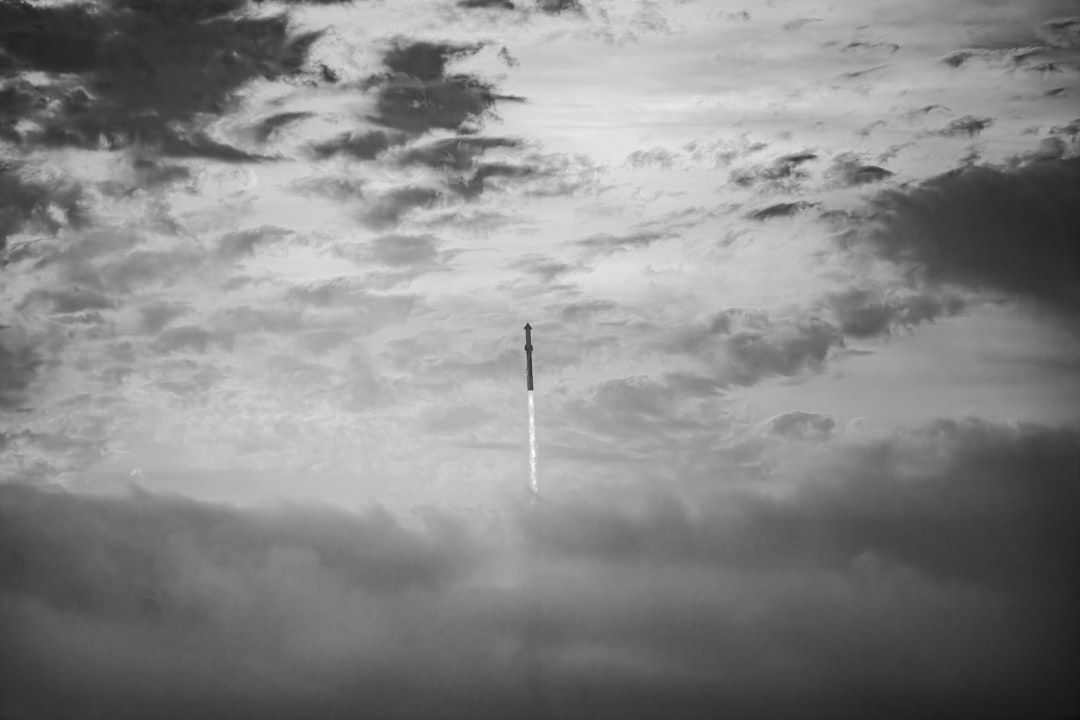
NASA is preparing for the 34th commercial resupply mission flown by SpaceX, targeting a mid-May launch to the International Space Station (ISS) with a fresh batch of scientific investigations, supplies, and equipment. The agency outlined the mission in an overview published May 10 on NASA.gov, framing it as the next step in keeping the orbiting laboratory stocked and scientifically productive.
While NASA has not yet publicly detailed every experiment in the cargo manifest, the agency’s description makes clear that this mission continues the pattern of using commercial cargo flights as the backbone of ISS operations and research.
What NASA Says This Mission Will Do
In its May 10 overview of SpaceX’s 34th Commercial Resupply Services (CRS-34) mission, NASA states that the flight is targeting a mid-May launch and is designed to deliver scientific investigations, supplies, and equipment to the ISS. That framing, repeated throughout the agency’s description, anchors the mission in three core functions:
- Support ongoing and new scientific investigations in microgravity
- Replenish crew supplies such as food and basic necessities
- Deliver equipment needed to maintain and upgrade the station
NASA’s language places the emphasis squarely on the ISS as an active research platform rather than just a destination. The repeated references to the spacecraft, mission, and NASA in the coverage reflect that this is a routine yet essential part of how the agency keeps the station operating as a laboratory.
How This Fits Into SpaceX’s Cargo Role
The CRS-34 designation signals that this is the 34th cargo mission NASA has contracted to SpaceX under its Commercial Resupply Services program. While the May 10 overview does not list all previous flights, the numbering alone shows that NASA now relies on a regular cadence of SpaceX cargo runs to sustain the ISS.
By describing this launch as a “commercial resupply mission,” NASA underscores that the flight is part of a broader model in which the agency buys transportation services from private companies rather than operating all cargo spacecraft itself. The overview does not delve into program structure or policy, but the consistent use of the CRS label and the focus on SpaceX’s role make clear that this mission is one more link in a long-running logistics chain.
The ISS as a Science Platform
NASA’s May 10 communication about the CRS-34 mission repeatedly ties the cargo flight to scientific investigations on the ISS. Even without a full experiment list in the overview, this emphasis signals that research remains the central justification for these resupply runs.
The same day, NASA’s science site highlighted another mission, the Psyche spacecraft’s gravity assist at Mars, which captured images of the planet during its flyby. That separate report, on science.nasa.gov, illustrates how the agency uses multiple spacecraft and missions—both in deep space and in Earth orbit—to gather scientific data.
Taken together, the ISS cargo overview and the Psyche update show a consistent pattern: NASA positions its missions, whether robotic or crewed-support, as tools for producing new scientific knowledge. For CRS-34, the orbiting laboratory is the destination, and the cargo is the enabling infrastructure for experiments that cannot be run on Earth.
Why the Timing Matters
NASA’s overview specifies a mid-May target for launch, but does not publish an exact date in the material available as of May 10. That phrasing suggests the mission is approaching the final stages of pre-launch preparation, when hardware is typically integrated and loaded, and schedules are refined based on technical readiness and range availability.
For ISS operations, timing is not just a calendar detail. Cargo flights are planned around:
- Orbital mechanics: The station’s position and the spacecraft’s trajectory must align for rendezvous.
- Crew schedules: Astronauts must be available to monitor arrival, capture, and unloading.
- Consumable margins: Supplies such as food, water, and scientific consumables are managed so that new deliveries arrive before stocks run low.
NASA’s decision to publicly highlight the mission in early May indicates that the agency considers the mid-month window a realistic target, even as spaceflight schedules always carry some uncertainty due to weather or technical checks.
What’s at Stake for the ISS
Although NASA’s overview focuses on the immediate goals—delivering science, supplies, and equipment—the stakes for the ISS are broader.
Each CRS mission, including CRS-34, helps determine how effectively the station can continue to operate as a continuous research outpost. Without regular cargo flights:
- Experiments would lack materials, samples, and replacement parts.
- Crew time would be diverted from research to coping with shortages or deferred maintenance.
- The station’s ability to host new investigations would be constrained.
By emphasizing the scientific component of the cargo, NASA is effectively making the case that missions like CRS-34 are not just logistical runs but extensions of the agency’s research portfolio. The Psyche gravity-assist report, while about a completely different mission, reinforces this framing by showing NASA highlighting science outputs across its fleet on the same day.
How This Mission Connects to Other NASA Efforts
The May 10 article on science.nasa.gov describing the Psyche mission’s Mars gravity assist is not directly linked to CRS-34, but it provides useful context for how NASA communicates its missions.
In that report, NASA details how Psyche used Mars to change its trajectory and captured images of the planet in the process. The agency presents the maneuver both as a technical milestone and a scientific opportunity. The CRS-34 overview follows a similar pattern: a primarily operational mission—delivering cargo to the ISS—is framed as a key enabler of science.
The common thread is that NASA consistently highlights the scientific return or scientific potential of its missions, whether they involve:
- A deep-space probe performing a gravity assist
- A cargo spacecraft carrying experiments and equipment to low Earth orbit
This suggests that, within NASA’s own framing, the value of CRS-34 is measured largely in terms of the research it supports on the ISS, not just the tonnage of cargo delivered.
What to Watch in the Next Few Days
Over the next 24 to 72 hours, the most important developments for readers to watch relate to schedule and readiness for the CRS-34 launch.
NASA is likely to refine the specific launch date and time for the mid-May window as final checks proceed. The agency typically issues updates when:
- Launch dates are confirmed or adjusted
- Weather or technical reviews affect the schedule
- Final cargo loading milestones are reached
Readers following the mission should look for:
- A firmed-up launch date and time from NASA or SpaceX
- Any mention of key scientific investigations being highlighted for this flight
- Updates on ISS readiness to receive the cargo spacecraft
Those near-term signals will show whether CRS-34 is on track to launch in the middle of the month as NASA currently targets, and they will give a clearer picture of which experiments and equipment this mission is poised to support once it reaches the station.