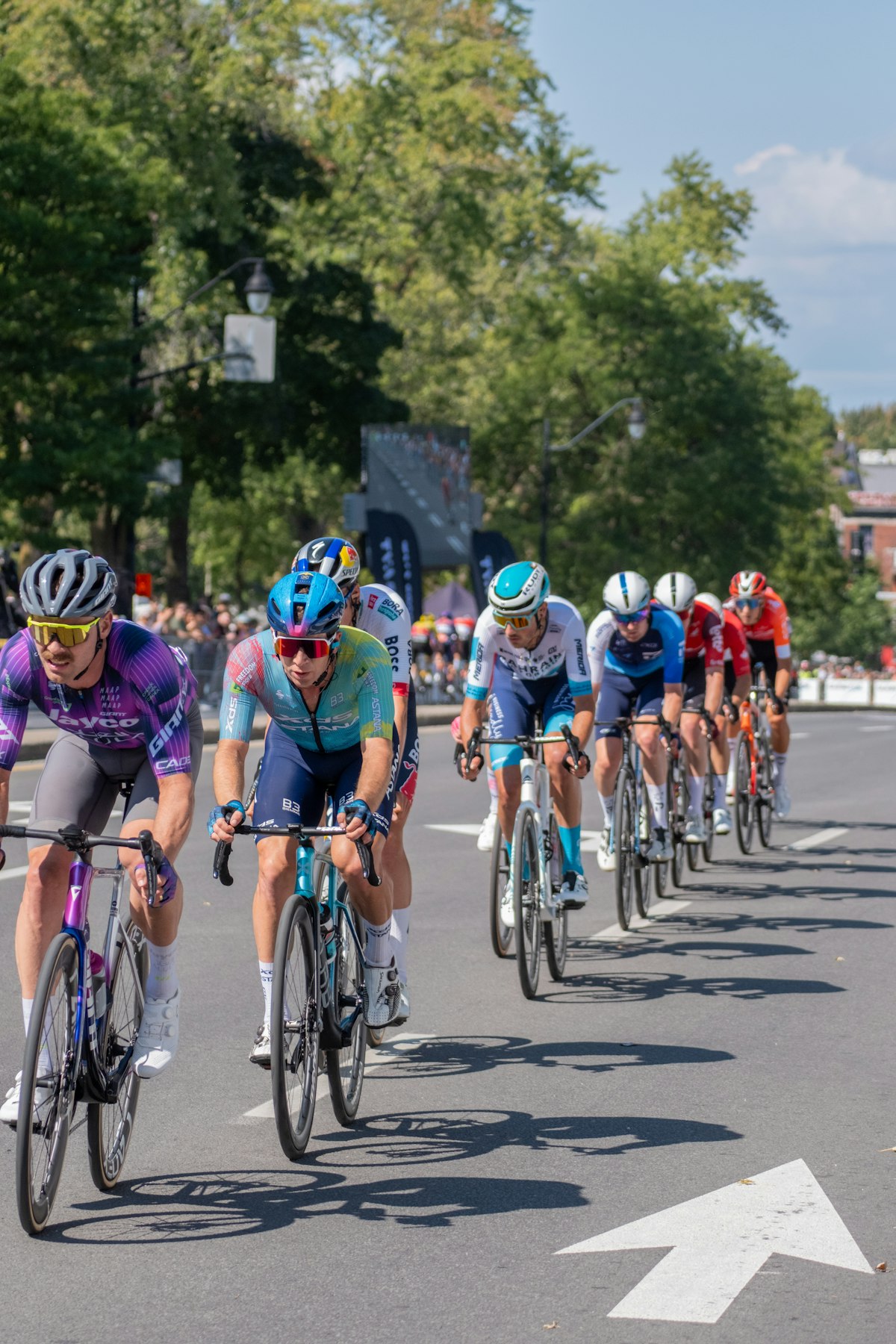
Tadej Pogačar, the Slovenian rider who won Sunday’s Tour of Flanders, is among a group of cyclists under investigation for riding through a red light at a railway crossing during the race, according to reporting by the Guardian. The incident, which occurred while the race was in progress, could lead to fines and possible suspensions if officials decide that rules were clearly broken.
The Guardian reports that Pogačar has said the signal to stop came too late for him and others to react safely, setting up a dispute over how responsibility should be assessed when race speed, safety, and traffic regulations collide.
What happened at the railway crossing
During Sunday’s Tour of Flanders in Belgium, a group of riders, including Pogačar, approached a level railway crossing as barriers and signals were activated. According to the Guardian’s account, some riders continued over the tracks despite a red light, which in normal traffic conditions indicates that all road users must stop.
Race footage and timing details were not fully described in the available reporting, but the Guardian states that officials have opened an investigation into whether riders failed to respect the signal in time. The core question for race and regulatory authorities is whether the riders had a realistic opportunity to stop once the signal changed, or whether braking sharply at race speed would itself have created a safety risk in the tightly packed group.
Pogačar is quoted in the Guardian’s reporting as saying that the signal to stop came too late, suggesting he believes he and others were already committed to crossing when the light changed. That claim has not yet been independently corroborated by additional outlets, and no detailed official reconstruction of the incident has been made public at this stage.
Who is investigating and what penalties are possible
The Guardian reports that the riders involved, including Pogačar, are now under formal investigation. The article does not specify which particular authority is leading the process, but in road racing such inquiries typically involve a combination of race organizers, the event jury (the panel of officials overseeing the race), and national or international cycling federations.
According to the Guardian, riders found to have crossed against a red signal at a railway line could face a financial penalty and a suspension from competition. The length and severity of any suspension were not detailed in the available reporting, and no disciplinary decisions have yet been announced.
At this point, the investigation is focused on determining:
- Whether the red light was clearly visible to riders in time to stop safely
- Whether any communication from race vehicles or officials contributed to the riders’ decisions
- Whether the behavior of the group constituted a clear rule violation under existing race and traffic regulations
Until those questions are answered, the status of any potential sanctions remains uncertain.
Pogačar’s position and what is at stake for him
Pogačar, a two-time Tour de France winner and one of the most prominent riders in the sport, won the Tour of Flanders on Sunday. The Guardian notes that he has argued the stop signal came too late, implying that he believes he acted in line with what was safe and reasonable in the moment.
The stakes for Pogačar are significant on several levels:
- Sporting consequences: A suspension could affect his ability to compete in upcoming races, depending on its length and timing.
- Reputational impact: As one of cycling’s leading figures, any disciplinary finding related to safety or rule adherence would likely draw wide attention within the sport.
- Precedent for future races: How officials interpret and apply the rules in this case could influence how riders and teams approach similar situations at road crossings in future events.
There is no indication in the Guardian’s reporting that Pogačar’s race victory is currently under review or in danger of being overturned. The focus, as described, is on the conduct at the railway crossing and any resulting disciplinary measures.
Why the incident matters for race safety and rules
Railway crossings are a known risk point in road cycling races. When a peloton — the main group of riders — approaches a crossing at high speed, officials must balance two priorities: keeping riders safe and enforcing traffic and race regulations.
The Guardian’s account of this incident highlights several broader issues that are now in play:
- Timing of safety signals: If riders believe the red light appeared too late to react safely, authorities will need to examine how and when signals are triggered during a race.
- Clarity of responsibility: The investigation will likely look at whether riders, race organizers, or external authorities bear primary responsibility when a race intersects with active rail infrastructure.
- Consistency of enforcement: Any penalties imposed in this case will be compared with past incidents, as teams and riders look for clear, predictable standards.
Because current reporting is based mainly on a single event-direct source, it is not yet clear how other stakeholders — including local authorities, rail operators, or the sport’s governing bodies — are characterizing the incident. That limits how far any conclusions can be drawn about broader systemic changes.
What to watch next
The key developments to watch now are:
- Outcome of the investigation: Officials have not yet announced findings or sanctions. Any decision on fines or suspensions will clarify how seriously the rule breach is viewed.
- Publication of evidence: If race organizers or federations release video, timing data, or official reports, that could either support or challenge the riders’ claim that the signal came too late.
- Responses from teams and governing bodies: Public statements from Pogačar’s team and from cycling authorities may provide more detail on how they interpret the rules around railway crossings.
Until those steps occur, the situation remains unresolved. What is clear from the Guardian’s reporting is that one of cycling’s most high-profile riders is now at the center of a safety and rules investigation that could carry both disciplinary and reputational consequences.
The case will help define how the sport handles the tension between race dynamics and external safety systems at critical points such as railway crossings, and it will signal to riders and organizers how similar incidents are likely to be judged in the future.