For more than a century, modern psychiatry has relied on checklists of symptoms to decide who has depression, attention deficit hyperactivity disorder (A.D.H.D.) or post-traumatic stress disorder. But a wave of recent research highlighted in a New York Times opinion piece argues that these familiar labels do not line up with what scientists can see in the brain or in our DNA.
According to that analysis, neither genetic testing nor brain imaging can reliably distinguish a person with a diagnosis like depression or A.D.H.D. from someone without it. Instead, the boundaries between disorders blur, raising questions about how mental health conditions are defined and treated — and what that means for patients, clinicians and emerging technologies that promise to measure the mind.
A Diagnosis System Built on Symptoms, Not Biology
The New York Times opinion article, published in May, centers on a basic tension: mental health diagnoses are still based on reported experiences and observed behavior, while much of medicine has shifted toward biological markers such as blood tests or imaging.
In psychiatry, clinicians typically use manuals like the Diagnostic and Statistical Manual of Mental Disorders (DSM) to group symptoms into categories. If a patient reports low mood, loss of interest, sleep changes and difficulty concentrating for a certain period, they may be diagnosed with major depressive disorder. A different pattern of inattention, impulsivity and hyperactivity may lead to an A.D.H.D. diagnosis.
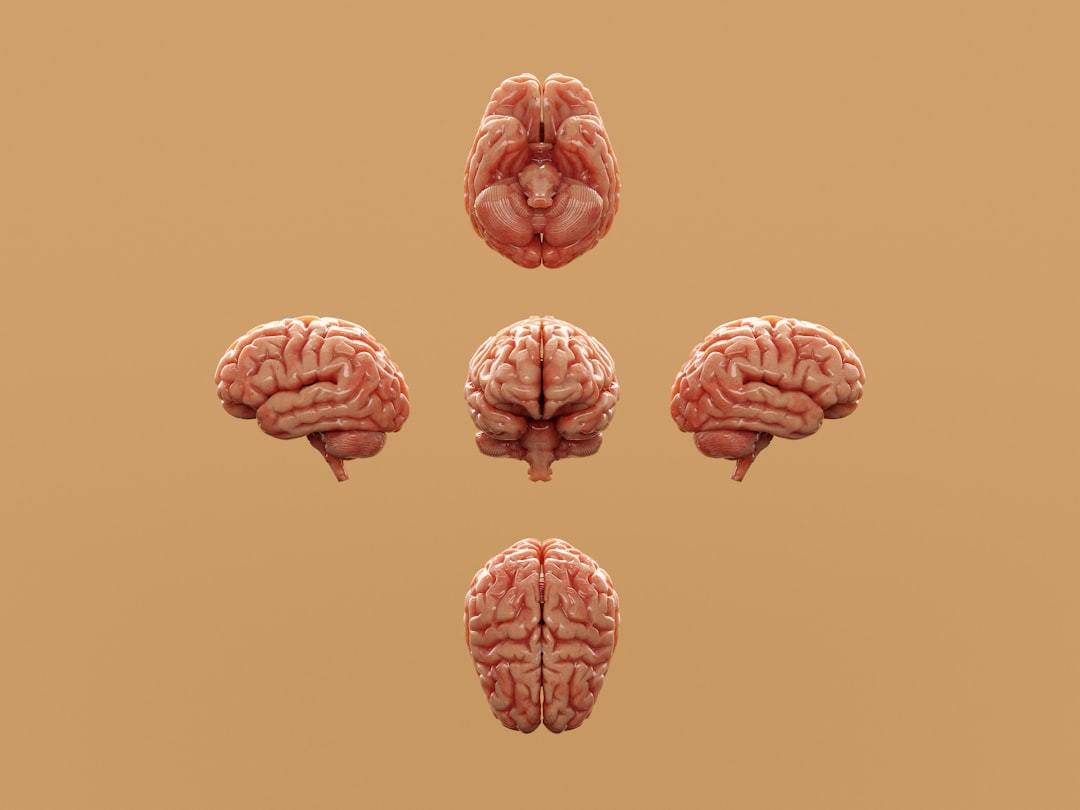
The Times piece notes that decades of research have tried to find biological signatures that match these categories. Scientists have scanned brains, sequenced genomes and tracked hormones. But as the article reports, the results have not produced clear dividing lines. People with the same diagnosis can have very different brain patterns or genetic profiles, while people with different diagnoses can look similar on those tests.
That mismatch, the author argues, suggests that current diagnostic labels may not reflect distinct underlying diseases in the way that terms like “type 1 diabetes” or “bacterial pneumonia” do.
What the Research Is Showing — and Not Showing
The New York Times essay draws on a body of work that has grown across clinical and research settings.
At the U.S. Department of Veterans Affairs, for example, mental health researchers with the Million Veteran Program are studying genetic and environmental factors linked to conditions such as depression, anxiety and post-traumatic stress disorder. According to a VA overview of that work, the program has collected health and genetic data from more than a million veterans to explore how genes, trauma exposure and other factors interact in mental health.
Yet, as the Times article emphasizes, even large-scale efforts like these have not delivered a simple genetic test that can diagnose a specific mental disorder. Instead, researchers are finding many small genetic influences that overlap across conditions. A person’s risk for depression, for instance, may share genetic components with anxiety or substance use problems, rather than falling into a clean, diagnosis-specific pattern.
Brain imaging has followed a similar path. The opinion piece notes that while group-level differences can sometimes be seen — such as average changes in certain brain regions among people with long-term depression — those patterns have not translated into a reliable scan that can tell an individual patient, with high confidence, which diagnosis they have.
This does not mean that biology is irrelevant to mental health. Rather, as the Times author and other researchers describe it, the biology appears to be complex, overlapping and influenced by life experiences. That complexity does not map neatly onto existing checklists of symptoms.
When Labels Shape Care — and Leave Gaps
The way diagnoses are defined has practical consequences. A Medscape report on emergency care for people at high risk of mental health crises, also published in May, describes how some high‑risk patients in accident and emergency (A&E) departments were left unmonitored despite serious concerns about self-harm.
According to that Medscape coverage, clinicians and safety reviewers found instances in which patients with severe mental health symptoms did not receive the level of observation their risk appeared to warrant. The article links those lapses partly to how risk is assessed and communicated in busy emergency settings.
While the Medscape report focuses on acute safety rather than diagnostic categories themselves, it illustrates how the labels and assessments used in mental health care can shape what happens to patients in real time: who is watched closely, who is discharged, and who receives follow‑up care.
The New York Times opinion piece argues that when diagnostic categories do not align well with underlying biology, they can also misdirect research and treatment. For example, if “depression” represents many different biological and psychological pathways that all produce low mood and fatigue, then a single treatment strategy is unlikely to help everyone with that label.
Rethinking How We Define Mental Health Conditions
The central claim in the Times article is not that diagnoses should be discarded, but that they may need to be reconceived.
The author points to research suggesting that mental health difficulties might be better understood along dimensions — such as mood regulation, attention, or threat sensitivity — rather than as entirely separate disorders. In this view, someone might have high levels of anxiety and moderate depression, rather than a single, sharply bounded diagnosis.
This dimensional approach has been explored in research frameworks such as the National Institute of Mental Health’s Research Domain Criteria, which aim to study mental functions and symptoms across traditional disorder categories. The Times piece highlights this kind of work as evidence that the field is already moving toward more flexible models, even if clinical practice still largely relies on conventional labels.
At the same time, the article acknowledges that diagnoses can be useful. They help patients access care, qualify for insurance coverage and find language for their experiences. The concern raised is that when those labels are treated as precise biological entities — rather than as working descriptions — they can overpromise what science can currently deliver.
Why This Debate Matters for Patients and Technology
The question of how to define mental health conditions is not just academic. It affects how new tools are built and used.
The Times opinion piece notes that if no clear biological marker separates “depressed” from “not depressed,” then technologies that claim to detect depression or A.D.H.D. from a brain scan, a genetic test or an app-based assessment may be relying on patterns that are less precise than they appear.
Similarly, the VA’s Million Veteran Program, as described in VA materials, is using large data sets to understand how genetics and environment contribute to mental health outcomes. Those findings could eventually inform more tailored treatments. But the current evidence, as reflected in both the VA’s cautious framing and the Times analysis, does not yet support replacing clinical interviews and observation with a simple lab test.
In emergency settings, the Medscape report shows that even existing assessment tools can fall short when systems are stretched. That underscores a broader point raised in the Times piece: improving mental health care may depend as much on how risk and need are recognized and responded to as on refining diagnostic categories.
What to Watch Next
In the coming weeks, readers can expect more discussion within psychiatry and psychology about how to reconcile symptom-based diagnoses with emerging biological data. Professional societies and research funders are likely to continue weighing dimensional approaches against traditional categories as new findings are published.
Clinically, hospitals and health systems responding to concerns like those raised in the Medscape report may review their procedures for monitoring high‑risk patients, potentially updating protocols or training. On the research side, large programs such as the VA’s Million Veteran Program are expected to release additional analyses that explore how genetics, trauma and other factors intersect in mental health, offering further evidence on whether current diagnoses capture what is happening in the body.
For patients and families, the immediate changes may be subtle: the language clinicians use to describe conditions, the way risk is assessed in emergency rooms, and the claims made by emerging mental health technologies. How those shifts unfold will help show whether the field can align its labels more closely with the complex reality of the human mind.