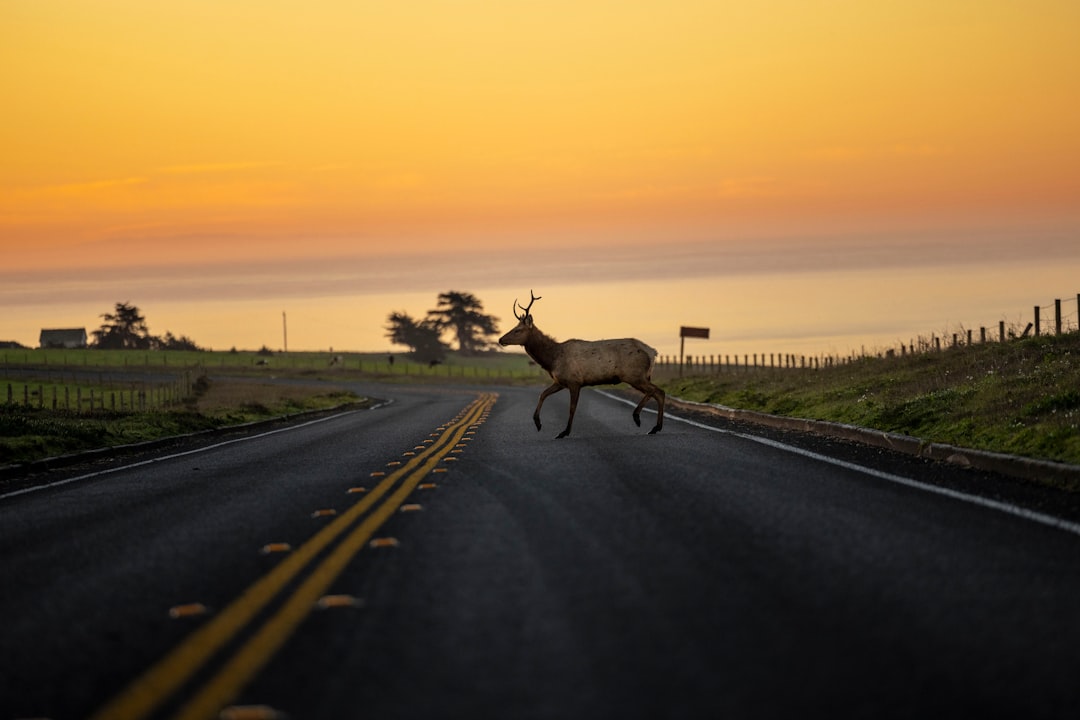
Butterflies and native wildflowers now cover the surface of a massive new bridge over a Los Angeles–area freeway, where cars and trucks continue to roar past below. The structure is not meant for people. Instead, it is being built to give mountain lions, coyotes, deer and smaller animals a way to safely cross one of southern California’s busiest roads.
According to reporting by the Guardian, the wildlife crossing — long attacked by conservative critics as wasteful and unnecessary — is now close to completion, marking a major milestone for a project that has become a national symbol of both habitat restoration and partisan dispute.
A ‘bridge to nowhere’ that leads somewhere very specific
The overpass spans a busy stretch of freeway in California and is designed as a dedicated wildlife crossing, the Guardian reports. The goal is to reconnect habitat that has been split by traffic lanes and concrete, allowing animals to move between areas that were once continuous.
Critics on the political right have repeatedly mocked the project, labeling it a “bridge to nowhere” and using its $114m price tag as an example, in their view, of government excess. The Guardian notes that these attacks framed the crossing as an emblem of misplaced priorities.
On the bridge itself, however, the scene described by the newspaper is far from the caricature. Reporters observed butterflies in the air, a red‑tailed hawk overhead and thousands of native plants — including California poppies and purple sage — already taking root across the span. The quiet, vegetated surface stands in stark contrast to the traffic rushing beneath it.
What the bridge is designed to do
As described in the Guardian’s account, the project is built specifically for wildlife, not for pedestrians or vehicles. The design includes:
- A wide, continuous span over the freeway to give animals a direct path
- Roughly 6,000 native plants, selected to mimic the surrounding landscape
- Habitat features intended to make the crossing feel like a natural piece of terrain rather than an artificial structure
By recreating familiar habitat on top of the bridge, planners aim to encourage animals to use it as part of their normal movements rather than avoid it as an unfamiliar obstacle. While the Guardian report focuses on the scene atop the bridge and the political debate around it, the underlying purpose is to reduce collisions between vehicles and wildlife and to reconnect fragmented ecosystems.
How the project became a political target
The Guardian reports that the wildlife bridge drew sustained criticism from conservative commentators and politicians, who questioned both its cost and its value. The $114m budget became a focal point in these attacks, with opponents arguing that the money could be better spent elsewhere and suggesting that few animals would ever use the crossing.
This criticism turned the structure into a talking point in broader arguments about public spending and environmental policy. Detractors framed it as an extravagant experiment, and the “bridge to nowhere” label was repeated in commentary and social media posts, according to the Guardian’s coverage.
Supporters, by contrast, pointed to the specific ecological problem the bridge is meant to address: wildlife cut off by a major freeway. They argued that the cost reflects the engineering challenge of spanning a large, heavily used road in a dense metropolitan area, and that the benefits — in terms of animal movement and reduced roadkill — justify the investment.
Nearing the finish line despite criticism
Despite the political attacks, the Guardian reports that construction has continued and the bridge is now close to completion. The presence of extensive planting and the description of a largely quiet, natural-feeling surface suggest that major structural work is finished and that crews are focused on habitat features.
The article does not provide a specific opening date, but its account of the nearly complete landscape on top of the bridge indicates that the project is in its final stages. Once fully finished and opened for use, the crossing is expected to allow a range of species — from large mammals to smaller animals — to move across the freeway without coming into contact with traffic.
Why this crossing matters
The Guardian’s reporting highlights two main reasons the project has drawn attention.
First, it is a prominent example of an effort to repair habitat fragmented by major roads. By spanning a heavily traveled freeway with a vegetated overpass, planners are attempting to restore some of the natural connections that existed before the road was built. The thousands of native plants described in the report are central to that approach, helping to create a continuous corridor of familiar habitat.
Second, the bridge has become a touchstone in debates over environmental spending. Its progress toward completion, despite years of criticism, shows how such projects can move forward even when they become political symbols. For supporters, the nearing finish line is evidence that long‑term conservation projects can survive partisan scrutiny. For opponents, the final cost and eventual usage will likely be watched closely as they continue to question whether the investment was justified.
As the Guardian account makes clear, the bridge is no longer just a proposal or a set of plans. It is a physical structure, now covered in plants and wildlife, that is almost ready for the animals it was built to serve. Observers will be looking next at how quickly and how often those animals choose to use it once it is fully open.